
Between Provenance and Preservation: The Firuzkuh Papers and the Ethics of Emergency Custodianship
16 October 2026
by Nastaran Kechechian
What happens when two principles of heritage ethics come into conflict? Provenance requires us to ask where an object came from, how it was acquired, and what its subsequent chain of ownership has been. Preservation asks what was necessary to ensure that it survived at all. In conflict zones, the two do not always point in the same direction.
Sanāʾī of Ghazna, the twelfth-century poet, offers a useful parable. He describes a nurse who at different moments restrains a child in its cradle, holds and kisses it, or treats it harshly. To a stranger who sees only part of her behaviour and knows nothing of its circumstances, the nurse may appear unkind. But Sanāʾī asks:
“How could you know? The nurse knows better; she acts according to the conditions of the task.”
The history of the Firuzkuh Papers poses a comparable ethical problem. How should we judge the private custody of displaced historical documents when the alternatives available at the time may have been loss, destruction or dispersal? And how should our judgment change when the circumstances themselves change?
The Firuzkuh Papers: Between Ethics and Survival
In 1991, when Afghanistan was grappling with the consequences of war, widespread insecurity, illegal excavation and severely weakened institutions, a collection of pre-Mongol Persian documents was found near the village of Shahr-i Khurū in Ghur province.
To the local people who discovered the fragments now called the Firuzkuh Papers by the Invisible East programme, they were scraps of paper rather than gold or objects of obvious value. Today, however, we know that they constitute some of the earliest New Persian evidence for the administrative, economic and social history of eastern Khurasan in the twelfth and early thirteenth centuries.
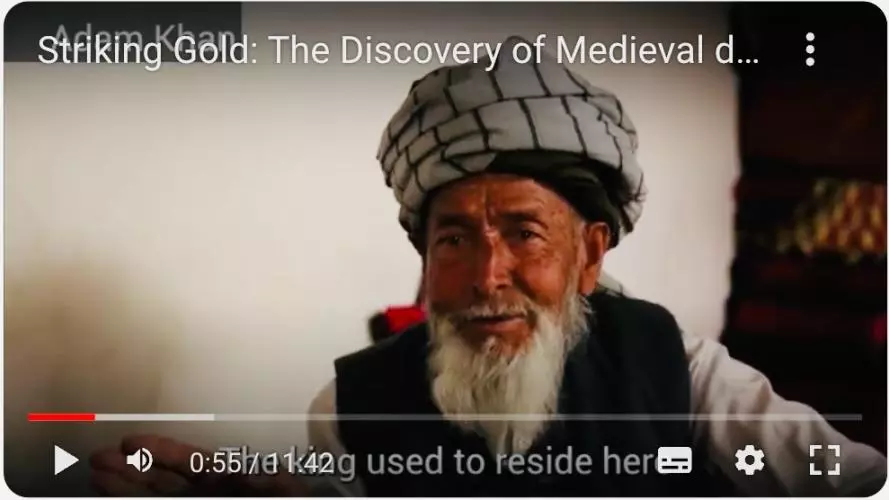
Mirza Khwaja Muhammad, a local calligrapher from Ghur and man of letters, was the first person to recognise their significance. He acquired the documents from local people and preserved them in a notebook.
Seen from the perspective of a stable society with functioning heritage institutions, his actions immediately raise ethical questions. Why were the documents not transferred to a public institution? Who had the right to acquire and preserve them? When does rescue become private appropriation?
In 1991, when Muhammad acquired the documents, the legal situation was clearer than the ethical dilemma. Afghanistan’s 1980 Law on the Preservation of Historical and Cultural Heritage treated newly discovered historical and cultural property as public property and required finders to report such discoveries to the relevant authorities. In practice, however, the state's reach was severely limited. By mid-1990, government control had largely contracted to cities and their immediate surroundings, while in many areas outside its effective control local shuras and commanders performed governmental functions. The existence of a legal framework, therefore, did not necessarily mean that an accessible or functioning institutional route for protecting such material was available in practice.
These questions should not be avoided. But neither can they be answered without considering the circumstances in which the documents were found. To judge Muhammad’s actions solely against the institutional standards available in a stable political environment risks committing the error in Sanāʾī’s parable: judging an action without understanding the conditions that made it necessary.
I suggest that Muhammad’s actions are better understood as a form of emergency custodianship: temporary local protection of vulnerable heritage under circumstances in which safer institutional alternatives were uncertain or unavailable. The term does not remove questions of ownership or provenance, nor does it imply that private custody should become permanent. On the contrary, its ethical legitimacy depends precisely upon its emergency and provisional character.
Although “emergency custodianship” is not an established term in heritage law or conservation practice, the principle it describes has close parallels in existing frameworks for protecting cultural heritage in crisis. Aparna Tandon's First Aid to Cultural Heritage in Times of Crisis, developed by the International Centre for the Study of the Preservation and Restoration of Cultural Property (ICCROM) and the Prince Claus Fund, starts from the recognition that local communities are often the first to safeguard heritage during emergencies. It provides a framework for emergency interventions when ordinary systems of conservation and institutional protection have broken down or become inaccessible. The aim is not to suspend ethical standards, but to respond proportionately to immediate risks of destruction, dispersal or loss, while working towards longer-term recovery and responsible stewardship.
An even closer parallel is the established concept of a “safe haven” for endangered cultural material. The idea of providing refuge for cultural property is not new: the 1954 Hague Convention already recognises refuges intended to shelter movable cultural property during armed conflict. Its First Protocol also makes clear that such protection is temporary, requiring deposited cultural property to be returned after hostilities. Guidelines adopted by the International Law Association recognise that armed conflict, natural disaster, illegal excavation and other forms of insecurity can create circumstances in which cultural material needs to be removed temporarily to a safer location. Significantly for Afghanistan, the Guidelines cite the temporary safeguarding of Afghanistan's cultural material at the Afghanistan Museum and Library in Bubendorf, Switzerland, between 1999 and 2007. Safe-haven custody is conceived not as acquisition but as trusteeship: material should be documented, protected from commercial exploitation and illicit trafficking, and ultimately returned to appropriate custody when circumstances permit.
For documents specifically, the International Council on Archives and Swisspeace have developed Guiding Principles for Safe Havens for Archives at Risk. These recognise that exceptionally endangered archives may require temporary relocation or other forms of protective custody when ordinary arrangements cannot guarantee their survival.
Seen against these frameworks, Mirza Khwaja Muhammad's actions might be understood as an informal and locally initiated form of emergency custodianship. This does not retrospectively resolve questions of ownership, acquisition or provenance. Rather, it suggests that ethical assessment should distinguish temporary safeguarding under conditions of immediate risk from permanent appropriation, or attempts at appropriation. The later history of the Firuzkuh Papers—their documentation and study by Muhammad and Nabi Saqee and eventual transfer to the National Archives—becomes crucial to that distinction.
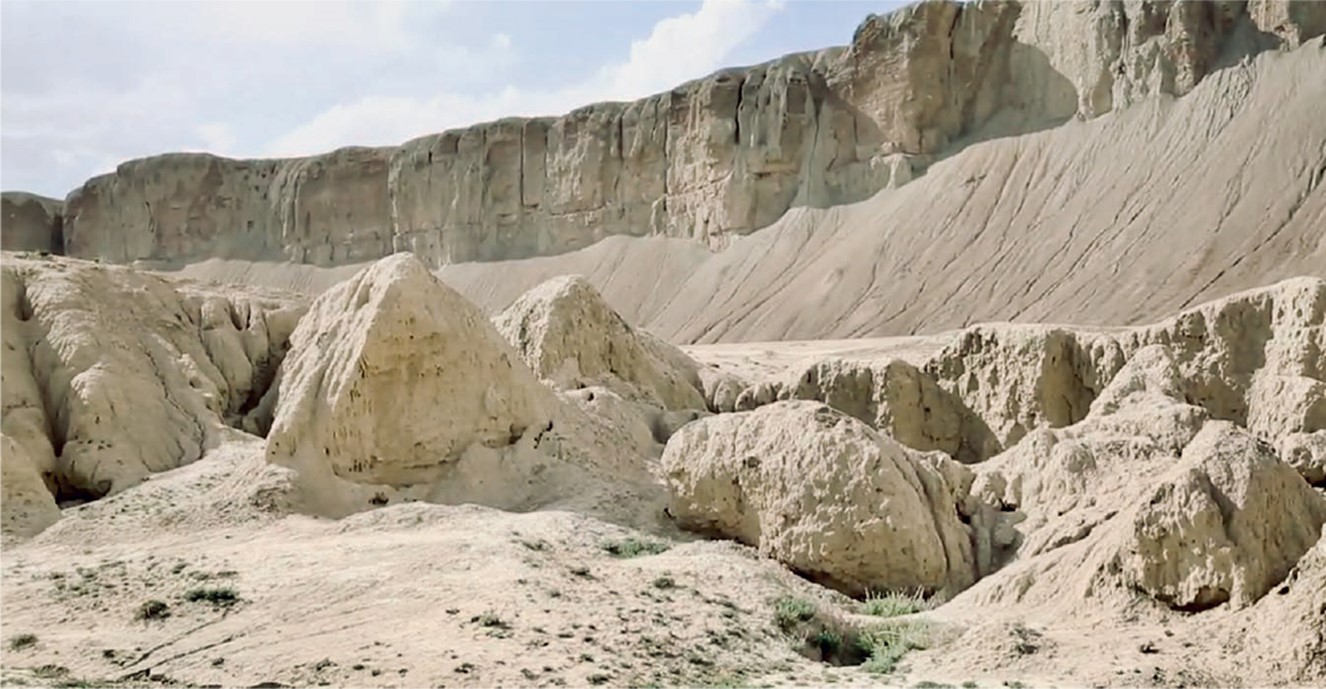
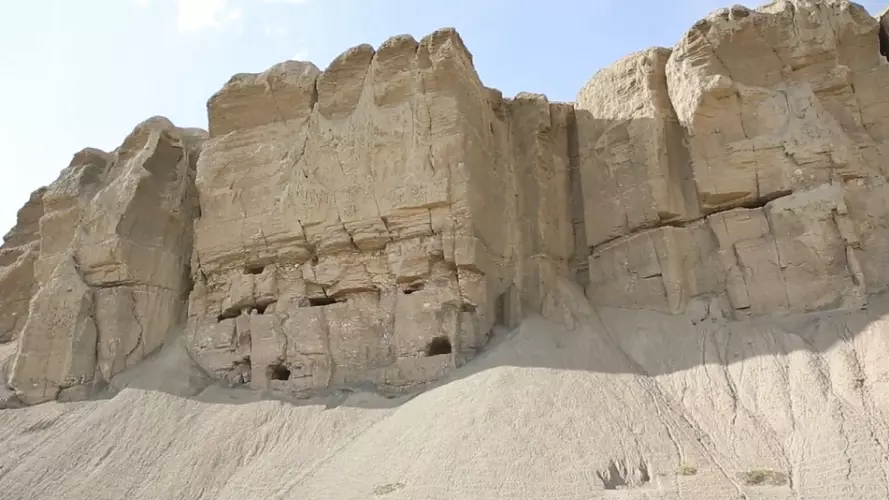
Figure 1. Taghcha-yi Kamara, Shahr-i Khuru, find-spot of the Firuzkuh Papers. Photograph: Said Maruf Saidi. © Invisible East.
When the Conditions Change
I first began thinking seriously about this problem in Autumn 2025, when I participated in a master’s course on The Heritage of Afghanistan, taught by Arezou Azad at Inalco in Paris (Institut national des langue et civilisations orientales). We were asked to select a work or collection relating to Afghanistan’s heritage and develop a hypothetical proposal for its preservation, including a strategy for attracting support from UNESCO. I chose the Firuzkuh Papers.
What initially seemed like a straightforward preservation exercise quickly became much more complicated. Many international heritage mechanisms presuppose functioning institutions, administrative correspondence, access to collections and cooperation between governments. Yet these conditions cannot always be assumed in countries affected by prolonged war, political instability or international isolation.
The difficulty has become particularly acute since the political changes of 2021. International engagement with Afghanistan’s official institutions has been severely constrained, complicating access, research and cooperation over cultural heritage. Should preservation simply wait until normal institutional relations return? Or can other actors—local custodians, scholars and projects such as Invisible East—play an interim role in preserving and sharing knowledge without claiming to substitute for legitimate physical custody?
The subsequent history of the Firuzkuh Papers is important because it shows that emergency custodianship need not be the endpoint.
In 2007 and 2008, Nabi Saqee, a local teacher and self-taught historian of Ghur, began working with Mirza Khwaja Muhammad, the local calligrapher who had preserved the papers. The two recognised the historical significance of the documents and collaborated to read, record and scan them. Their work resulted in a small Dari/Persian book, Barg-hā-yi az yak faṣl, yā asnād-i tārīkhī-yi Ghūr, published in Kabul in 2009 in an edition of 2,000 copies that circulated little outside Afghanistan.
As security conditions in Ghur deteriorated, Saqee became increasingly concerned about the vulnerability of documents held loosely in private storage. He encouraged Muhammad to place them in a public institution where they could receive more secure long-term protection. In 2020, during the Covid pandemic and only months before the Taliban takeover, the Firuzkuh Papers were handed over to the National Archives of Afghanistan.
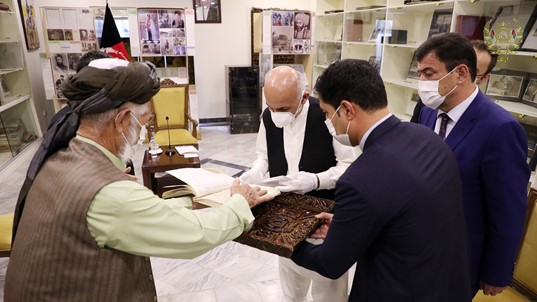
This chronology is crucial. Muhammad’s private custody was not an alternative principle to institutional preservation. It was a response to a particular historical situation. When the conditions changed, the appropriate form of stewardship changed with them. Emergency preservation eventually gave way to institutional custody. This is precisely the logic of emergency custodianship: a temporary form of safeguarding under conditions of crisis, rather than an alternative to long-term public stewardship. It suggests that heritage ethics should attend not only to where an object is held at one moment, but to the trajectory of its care.
The Bamiyan Papers: Testing the Limits of the Argument
The Bamiyan Papers present a more difficult case and help test the limits of this argument.
Previously known as the “Afghan Genizah,” a substantial part of the collection is now held by the National Library of Israel. The papers constitute one of the most important bodies of New Persian and Judeo-Persian documents from the pre-Mongol eastern Islamicate world. Some are among the earliest surviving examples of Persian written in Arabic script.
Like the Firuzkuh Papers, they transform our view of medieval Afghanistan. Rather than the courtly and political narratives that dominate conventional histories, they preserve financial, legal and administrative records and private letters through which we glimpse economic relationships and everyday lives.
But the route by which the Bamiyan Papers passed through the antiquities market and ultimately reached a collection outside Afghanistan raises substantially different questions about provenance, excavation, ownership and displacement.
Preservation cannot retrospectively legitimate every stage in an object’s movement merely because the object survived.
Cecilia Palombo and Donna Yates have drawn attention to precisely this problem. In their critique of the digitisation of material with uncertain provenance, they warn that digital spaces can function as “digital transit ports”: places through which problematic histories of excavation and transfer are obscured as objects acquire scholarly legitimacy through digitisation, research and open access.
This warning needs to be taken seriously. Digitisation must not wash away provenance, because making material more accessible should not obscure the circumstances in which it was excavated, transferred or displaced.
Yet making complete provenance a precondition for all research creates another ethical difficulty. Many documentary collections come from regions already marginalised by war, insecurity and distance from major academic institutions. Refusing to study them may not restore the objects or repair the circumstances of their displacement. It may instead produce a second dispossession, in which communities that have lost physical custody of their heritage also lose access to the histories those documents preserve.
The challenge, then, is not to choose between provenance and research. It is to practise research in a way that keeps problematic provenance visible.
Research neither cures nor cancels problematic provenance. Its ethical obligation is to make that provenance explicit while returning knowledge and access wherever possible.
From Digital Repatriation to Digital Return
Digitisation can form part of this process, but its claims should remain modest, because digital access cannot by itself resolve the legal and ethical questions attached to the physical object.
Reading, translating and making displaced documents accessible online can create a form of digital return: restoring access and interpretive connection to the languages, histories and societies from which the material emerged. It cannot substitute for physical restitution, resolve questions of ownership, or undo the circumstances through which objects were displaced; it can, however, restore access to knowledge rather than possession, ownership or physical custody.
As Ahmad Mohammed argues in relation to “digital repatriation,” digital access becomes ethically meaningful only when questions of ownership, control, interpretive authority and the role of originating communities remain part of the discussion.
Projects such as Invisible East can therefore contribute something important without claiming to solve the underlying problem. They can document provenance as accurately as the evidence permits; make transcriptions and translations publicly available; involve scholars connected to the regions from which the documents came; and return historical knowledge to communities that may no longer have physical access to the original material. This is preservation of knowledge, not resolution of ownership.
Survival Is Not Enough: Recognising Chains of Custodianship
Emergency custodianship becomes necessary when the institutions normally responsible for heritage protection cannot act, cannot be reached, or cannot provide immediate protection. In such circumstances, waiting for formal institutional intervention may itself increase the risk of loss, dispersal, or destruction. However, an ethical framework should do more than tolerate it retrospectively. It should encourage movement from emergency preservation towards documentation, responsible access and, where possible, secure and accountable institutional care. Recognition can play a role in that transition.
UNESCO’s 2015 Recommendation concerning the Preservation of, and Access to, Documentary Heritage Including in Digital Form treats documentary heritage as having potentially global significance and its preservation as a shared responsibility. Importantly for cases such as Afghanistan, it calls for attention to “cultural mores and practicalities.”
The difficulty is that formal recognition mechanisms themselves depend upon institutional conditions that may not always exist. Nomination to UNESCO’s Memory of the World Register ordinarily requires the involvement and consent of owners or custodians and formal institutional processes.
For collections in countries where international institutional cooperation is severely constrained, these apparently straightforward requirements can become formidable obstacles.
The Firuzkuh Papers suggest that recognition might therefore focus not only on documents, but also on chains of custodianship.
Their survival was not the achievement of one individual or institution. Local people found the papers. Mirza Khwaja Muhammad recognised their significance and preserved them for decades. Nabi Saqee helped read, record and publish them, and encouraged their eventual transfer to the National Archives. The National Archives accepted institutional custody. More recently, Invisible East has worked to study, translate, digitise and make the collection accessible to wider scholarly and public audiences.
Each stage performed a different kind of work.
For this reason, I believe mechanisms such as the UNESCO/Jikji Memory of the World Prize offer an interesting possibility. Unlike inscription on the Memory of the World Register, however, the prize does not focus on the documents themselves, but on contributions to the preservation and accessibility of documentary heritage. Its nomination process also does not necessarily depend on the owner or custodian of the documents, since nominations may be submitted by Member States, in consultation with their National Commissions, or by international non-governmental organisations maintaining official relations with UNESCO.
Its 2024 laureate, the National Library of Indonesia, was recognised for extensive work preserving and expanding access to Indonesian manuscripts.
A future nomination relating to the Firuzkuh Papers might therefore document not simply the importance of the collection, but the chain of local preservation, scholarly intervention, institutional transfer and public access that made its survival possible. Invisible East could contribute the scholarly evidence for such a dossier—the significance of the documents, their known history, and the contributions of Muhammad and Saqee—if an eligible nominating body wished to pursue it.
Such recognition would need to be framed carefully. It should not reward illegal excavation, concealment or permanent private possession of cultural heritage. Rather, it could send a different message to people living in regions where institutional protection has temporarily broken down: preserve rather than destroy; document rather than conceal; collaborate rather than monopolise; and, when safer institutional custody becomes possible, help heritage move towards it.
Ethics in Changing Circumstances
The lesson of the Firuzkuh Papers is not that preservation excuses uncertain provenance, nor that local custodians should stand outside ethical scrutiny. It is that ethical judgment must be historical as well as normative.
When institutions collapse, the first act of preservation may be improvised and imperfect. What matters is also what follows: whether emergency custody becomes concealment or care; whether provenance is obscured or documented; whether knowledge is monopolised or shared; and whether, when circumstances permit, private protection gives way to accountable stewardship.
Sanāʾī’s nurse therefore remains an apt guide. Her actions cannot be understood from a single moment because care responds to changing circumstances.
So too with endangered documentary heritage. The ethical question is not simply who held the documents, but what their custody made possible: survival, knowledge, access—and ultimately, a safer future.
Notes:
Sanāʾī al-Ghaznavī, Ḥadīqat al-ḥaqīqa wa sharīʿat al-ṭarīqa, ed. Ali-Mohammad Saberi, Roghayeh Teymourian, and Behzad Saeedi, chap. 1, “Fī zīnat al-aṭfāl,” 36–37.
Nabi Saqee, “Fīrūzkūh Papers: Pre-Mongol Persian Documents from Today’s Afghanistan,” Invisible East Blog, University of Oxford, November 2024.
Afghanistan, The Law on the Preservation of the Historical and Cultural Heritage, Official Gazette no. 469, 21 December 1980, arts. 7 and 25, UNESCO Cultural Heritage Laws Database. See also Afghanistan, Law on the Protection of Historical and Cultural Properties, Issue no. 828, 21 May 2004, art. 85, which expressly repealed the 1980 law.
Asia Watch, The Forgotten War: Human Rights Abuses and Violations of the Laws of War Since the Soviet Withdrawal (New York: Human Rights Watch, February 1991).
Aparna Tandon, First Aid to Cultural Heritage in Times of Crisis: Handbook (Rome: ICCROM and Prince Claus Fund for Culture and Development, 2018).
UNESCO, Convention for the Protection of Cultural Property in the Event of Armed Conflict with Regulations for the Execution of the Convention, The Hague, 14 May 1954, art. 8.
UNESCO, Protocol to the Convention for the Protection of Cultural Property in the Event of Armed Conflict, The Hague, 14 May 1954, para. II(5).
International Law Association. “Guidelines for the Establishment and Conduct of Safe Havens.” International Journal of Cultural Property 16, no. 4 (2009): 371–378.
International Council on Archives / swisspeace. Guiding Principles for Safe Havens for Archives at Risk.
Nabi Saqee, personal communication with the author, 2026; Mīrzā Khwāja Muḥammad and Nabi Saqee, Barg-hāyī az yak faṣl, yā asnād-i tārīkhī-yi Ghūr (Kabul, 1388/2009); Nabi Saqee, “Fīrūzkūh Papers: Pre-Mongol Persian Documents from Today’s Afghanistan,” Invisible East Blog, University of Oxford, November 2024.
Personal communication with Nabi Saqee, July 2026.
Arezou Azad, The Warehouse of Bamiyan: Economic Life in Medieval Afghanistan (Edinburgh: Edinburgh University Press, 2025), 69–70, 199–200, 203.
Cecilia Palombo and Donna Yates, “Digital Transit Ports for the Illicit Trade in Antiquities: The Case of the ‘Afghan Genizah’,” Digital Scholarship in the Humanities 38, no. 1 (2023): 257–276. https://doi.org/10.1093/llc/fqac032.
Ahmad Mohammed, “Beyond Access: Rethinking Ownership, Justice, and Decolonization in Digital Repatriation Initiatives,” The Heritage Management Organization, April 28, 2025; UNESCO, Recommendation concerning the Preservation of, and Access to, Documentary Heritage Including in Digital Form (Paris: UNESCO, 2015).
UNESCO, “Recommendation concerning the Preservation of, and Access to, Documentary Heritage Including in Digital Form,” adopted November 17, 2015.
UNESCO, “Call for Nominations for the UNESCO Memory of the World International Register: 2026–2027 Nomination Cycle,” June 30, 2025; UNESCO, General Guidelines of the Memory of the World Programme, CI/MOW-REG/2021/Guidelines/1 (Paris: UNESCO, 2021).
UNESCO, “UNESCO/Jikji Memory of the World Prize”; UNESCO, UNESCO/Jikji Memory of the World Prize: Guidelines for Nominators and Adjudicators, CI/MOW-JIKJI/2010/Guideline/1 (Paris: UNESCO, 2010).
UNESCO, “The National Library of Indonesia to Receive 2024 UNESCO/Jikji Memory of the World Prize,” September 3, 2024.
UNESCO, “Call for Nominations for the UNESCO/Jikji Memory of the World Prize,” March 3, 2026.
Afghanistan. The Law on the Preservation of the Historical and Cultural Heritage. Official Gazette no. 469, 21 December 1980. UNESCO Cultural Heritage Laws Database.
Afghanistan. Law on the Protection of Historical and Cultural Properties. Issue no. 828, 21 May 2004. UNESCO Cultural Heritage Laws Database.
Asia Watch. The Forgotten War: Human Rights Abuses and Violations of the Laws of War Since the Soviet Withdrawal. New York: Human Rights Watch, February 1991.
Azad, Arezou. The Warehouse of Bamiyan: Economic Life in Medieval Afghanistan. Edinburgh: Edinburgh University Press, 2025.
International Council on Archives / swisspeace. Guiding Principles for Safe Havens for Archives at Risk.
International Law Association. “Guidelines for the Establishment and Conduct of Safe Havens.” International Journal of Cultural Property 16, no. 4 (2009): 371–378.
Invisible East Digital Corpus. “New Persian Documents.” University of Oxford. https://invisibleeast.site.ox.ac.uk/new-persian
Mohammed, Ahmad. “Beyond Access: Rethinking Ownership, Justice, and Decolonization in Digital Repatriation Initiatives.” The Heritage Management Organization, April 28, 2025. https://heritagemanagement.org/beyond-access-rethinking-ownership-justice-and-decolonization-in-digital-repatriation-initiatives/
Muhammad, Mīrzā Khwāja, and Nabi Saqee. Barg-hāyī az yak faṣl, yā asnād-i tārīkhī-yi Ghūr. Kabul, 1388/2009.
Palombo, Cecilia, and Donna Yates. “Digital Transit Ports for the Illicit Trade in Antiquities: The Case of the ‘Afghan Genizah’.” Digital Scholarship in the Humanities 38, no. 1 (2023): 257–276. https://doi.org/10.1093/llc/fqac032.
Sanāʾī al-Ghaznavī. Ḥadīqat al-ḥaqīqa wa sharīʿat al-ṭarīqa, ed. Ali-Mohammad Saberi, Roghayeh Teymourian, and Behzad Saeedi, chap. 1, “Fī zīnat al-aṭfāl.”
Saqee, Nabi. “Fīrūzkūh Papers: Pre-Mongol Persian Documents from Today’s Afghanistan.” Invisible East Blog, University of Oxford, November 2024. https://invisibleeast.site.ox.ac.uk/article/firuzkuh-papers-pre-mongol-persian-documents-todays-afghanistan
Tandon, Aparna. First Aid to Cultural Heritage in Times of Crisis: Handbook. Rome: ICCROM and Prince Claus Fund for Culture and Development, 2018.
UNESCO. “Call for Nominations for the UNESCO Memory of the World International Register: 2026–2027 Nomination Cycle.” June 30, 2025.
UNESCO. “Call for Nominations for the UNESCO/Jikji Memory of the World Prize.” March 3, 2026.
UNESCO. Convention for the Protection of Cultural Property in the Event of Armed Conflict with Regulations for the Execution of the Convention. The Hague, 14 May 1954.
UNESCO. General Guidelines of the Memory of the World Programme. CI/MOW-REG/2021/Guidelines/1. Paris: UNESCO, 2021.
UNESCO. Protocol to the Convention for the Protection of Cultural Property in the Event of Armed Conflict. The Hague, 14 May 1954.
UNESCO. Recommendation concerning the Preservation of, and Access to, Documentary Heritage Including in Digital Form. Paris: UNESCO, 2015.
UNESCO. “The National Library of Indonesia to Receive 2024 UNESCO/Jikji Memory of the World Prize.” September 3, 2024.
UNESCO. “UNESCO/Jikji Memory of the World Prize.”
UNESCO. UNESCO/Jikji Memory of the World Prize: Guidelines for Nominators and Adjudicators. CI/MOW-JIKJI/2010/Guideline/1. Paris: UNESCO, 2010.
About the author:
Nastaran Kechechian is a Master’s student at INALCO in Paris. Her research focuses on language contact and linguistic interference between Persian and Turkic varieties in the South Caucasus, with particular attention to historical Shirvan and Persian–Azeri contact. She is also interested in Afghanistan’s cultural and documentary heritage, particularly questions of preservation, provenance, and access to historical collections.
Acknowledgements:
When this idea first came to me, I didn't imagine it could develop into such a concrete research topic. First, I thank Arezou Azad for creating the opportunity to develop this idea and for supporting me throughout the preparation of this article. I am also very grateful to Kristin Hausler (British Institute of International and Comparative Law) and Marina Lostal (University of Essex) for their insightful input, which helped clarify the legal dimensions of the argument. My thanks also go to Nabi Saqee for generously sharing his knowledge and experience of the Firuzkuh Papers, and to Matin Arghandehpour for his careful editorial reading of an earlier version of the article.