

Research tools
We have developed a number of research tools for the benefit of academics and enthusiasts of Islamic, Central Asian, Afghan and Iranian history, as well as the languages of the region and the late antique and medieval world.

Digital Corpus
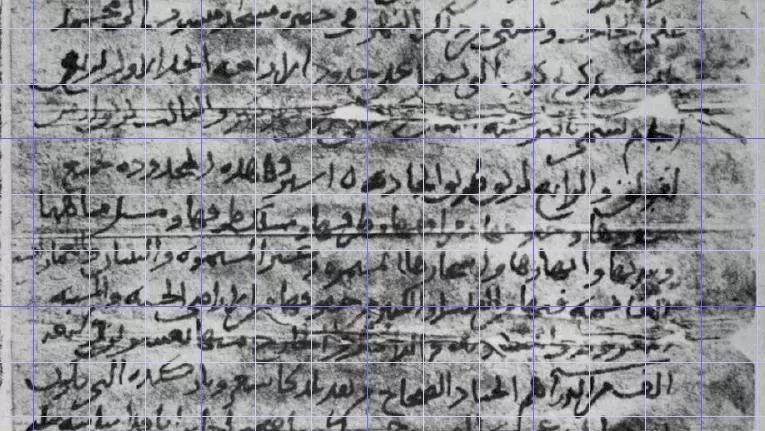
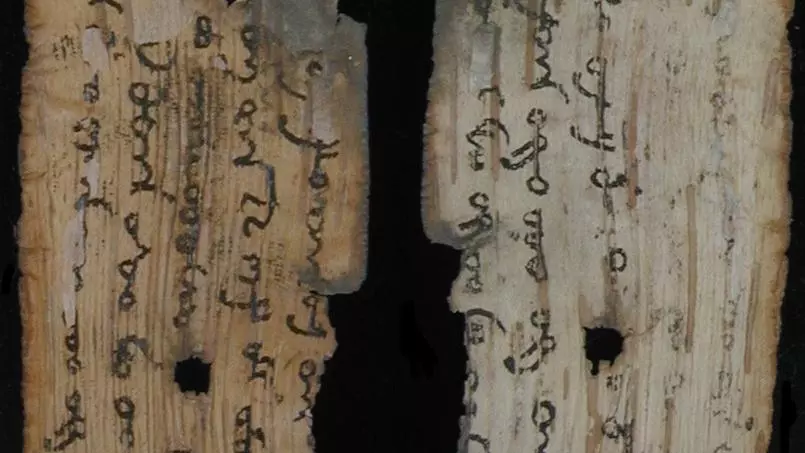
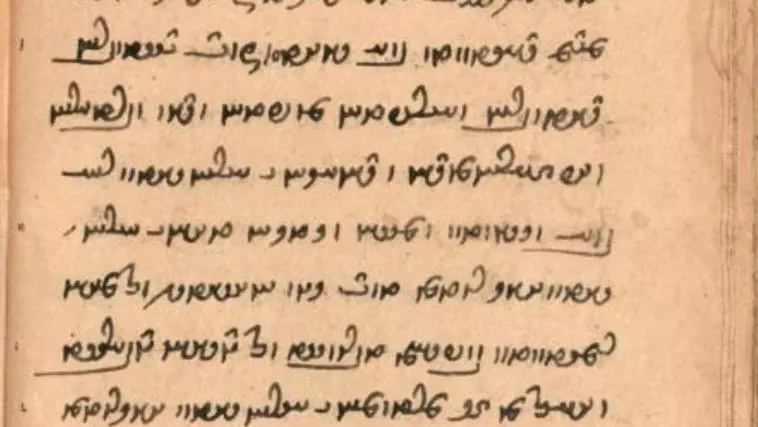
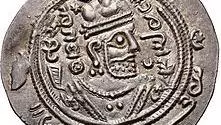
Invisible East has developed a Digital Corpus that contains searchable data on nearly 1,200 documents and local texts from the wider Islamicate East dating to between the 8th and 13th centuries CE. These include: meta-data in all instances, and in a smaller set, full transcriptions, translations, and commentary. The texts vary in type, including documents (for example sales deeds, marriage contracts, land survey reports, tax receipts, debt acknowledgements, administrative and personal letters), literary and poetic fragments, texts of a historical, religious or legal nature, and other miscellanea. The Digital Corpus is searchable by administrative, military and legal titles, offices and processes; agricultural terms, currencies and denominations; documentation terms; geographic administrative units; markings; measurement units; and religions. All data will be publicly accessible in accordance with ERC requirements.
Striking Gold
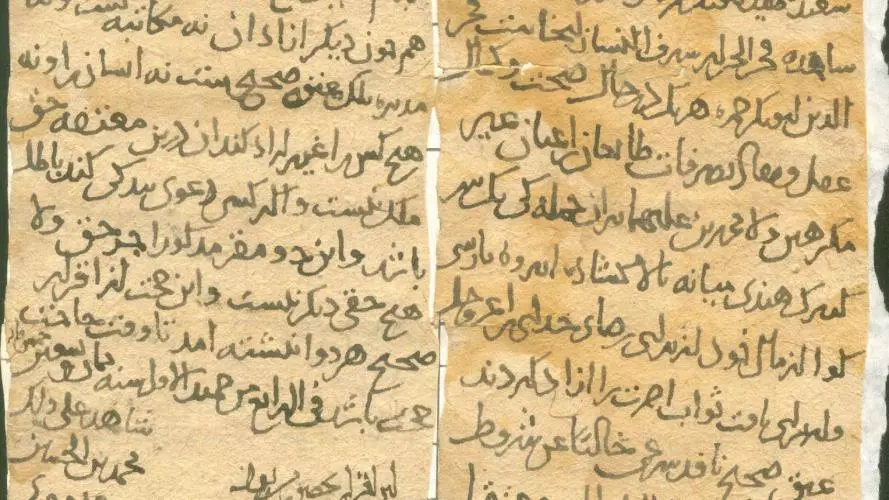
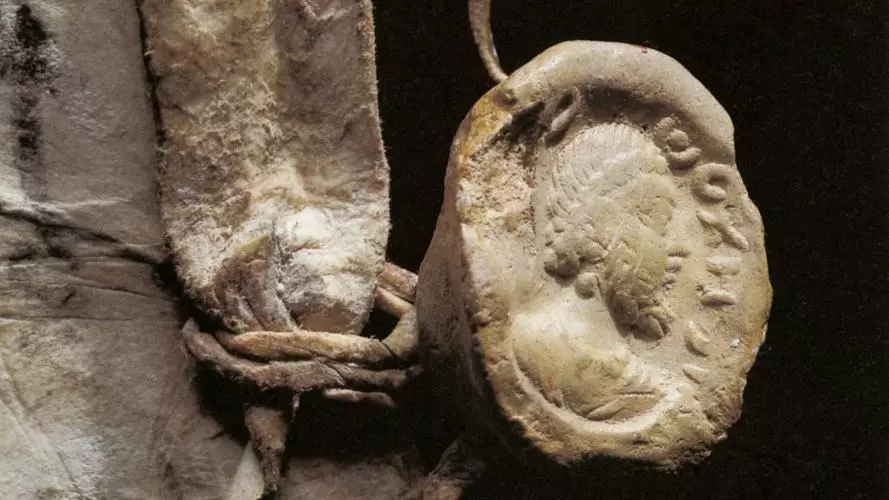
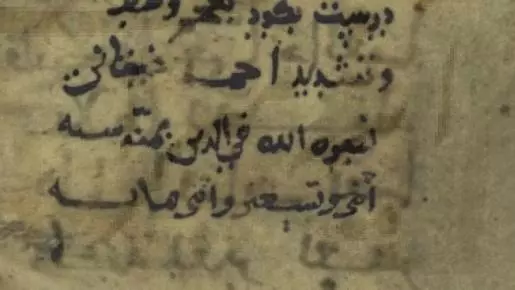
The film, Striking Gold: The Discovery of Medieval documents from Afghanistan is about the discovery, safeguarding, deciphering, and analysis of the fascinating Firuzkuh Papers.
Written in Afghanistan's Ghalmin area of Ghur in the 12th-13th century CE, the Firuzkuh Papers reveal rare details of the lives of agriculturalists and other rural communities in the medieval Islamicate world, and how historians can learn of the interactions between local communities and the administration of the vast Ghurid empire that reigned over parts of today's Iran, Afghanistan, and the Indian subcontinent in the 12th-13th century.
With rare footage from the ground collected through interviews with local residents in the Ghalmin area of Afghanistan who found the documents, Striking Gold also tells a story of the extreme challenges of heritage protection and history writing in Afghanistan.
Striking Gold was produced, directed, and edited in 2024 by the Invisible East programme in Oxford. We hope you enjoy the film!
To play the video, you need to accept cookies for videos.
Rethinking History: Returning to Archives and Documents
Future Philology: Digitisation and Beyond
Online symposium organised by the Invisible East programme, 30 Sept - 1 Oct 2021 At present, philology--the old art of reading slowly and carefully--is reinventing itself to become a discipline equipped with database technology. Scholars are setting up digital corpora of documents and manuscripts of various periods and regions. These digital corpora not only made precious historical sources much more accessible to academia, but also opened up new avenues of research on their content as well as their materiality. The Invisible East Programme at Oxford University is contributing to this field by creating, for the first time, a multilingual digital corpus of documents from the pre-Mongol Islamicate East. This region includes Iran, Afghanistan and Central Asia, in which documents were written in, inter alia, (Judeo-)Persian, Arabic, Middle Persian, Bactrian, Sogdian, and Khotanese. We are now inviting scholars working on databases of documents from the ancient and medieval world to share their experiences and insights.
Islamicate Manuscripts and Texts (IMaT)
This iteration of the Islamicate Manuscripts and Texts (IMaT) colloquium focussed on literary and documentary letters from the Islamicate world and adjacent areas in space and time, written in various languages including Arabic, New Persian, Middle Persian, and Sogdian. Issues explored included: the relationship between literary and documentary/private letters; the transmission of epistolary formulae and topoi over time, and between political units, languages, and religious communities; the various ways letters can be useful as sources for historians.
Other videos
MOOC: Afghanistan from Buddhism to Islam
In this series of five lectures, speakers will discuss various aspects of the life and culture of Afghanistan between the 8th and 13th century. Lectures: The Buddhas of Bamiyan, with Llewelyn Morgan Rural Life in Medieval Bamiyan, with Arezou Azad Connecting Worlds: The Shansabanis of Afghanistan, with Alka Patel Islamisation, a closer look, with Majid Montazer Mahdi A Day in Late Antique Bactria (In Persian), with Reza Huseini.
Documentary studies in the Islamicate east
Azad, A., and P. Firoozbakhsh. ‘“No One Can Give You Protection” - The Reversal of Protection in a Persian Decree Dated 562/1167’. Annales Islamologiques 54 (2020): 125–38. https://doi.org/10.4000/anisl.7808.
Gignoux, P. ‘Les Documents de Dādēn Dans l’archive de Berkeley/Berlin’. In Commentationes Iranicae: Сборник Статей к 90-Летию Владимира Ароновича Лившица, edited by S. R. Tokhtas’yev and P. B. Lur’ye. Nestor-Istoriya., 2013.
Gignoux, P. Une Archive Post-Sassanide Du Tabaristān (I).” In Objets et Documents Inscrits En Pārsīg. Edited by R. Gyselen. Res Orientales 21. Groupe pour l’étude de la civilisation du Moyen-Orient, 2012.
Gignoux, Ph. ‘Les Documents Économiques de Xwarēn’. In Trésors d’Orient: Mélanges Offerts à Rika Gyselen, edited by P. Gignoux, Ch. Jullien, and F. Jullien. Peeters, 2009.
Gignoux, Ph. ‘Les «mémoires» Dans l’archive Pehlevie de Berkeley/Berlin’. In A Thousand Judgements: Festschrift for Maria Macuch, edited by A. Hintze, D. Durkin-Meisterernst, and C. Naumann. Harrassowitz Verlag., 2019.
Gignoux, Ph. ‘Une Archive Post-Sassanide Du Tabaristān (II)’. In Documents, Argenterie et Monnaies de Tradition Sassanide, edited by R. Gyselen. Res Orientales 22. Groupe pour l’Étude de la Civilisation du Moyen-Orient., 2014.
Gignoux, Ph. ‘Une Archive Post-Sassanide Du Tabaristān (III)’. In Words and Symbols: Sasanian Objects and the Tabarestān Archive, edited by R. Gyselen. Res Orientales 24. Groupe pour l’étude de la civilisation du Moyen-Orient., 2016.
Gignoux, Ph., and R. Gyselen. ‘La Relation Des Sceaux à Leur Possesseur d’après Les Documents Économiques de La Collection de Berkeley’. In Proceedings of the 5th Conference of the Societas Iranologica Europæa: Held in Ravenna, 6-11 October 2003 - Ancient & Middle Iranien Studies, vol. 1, edited by A. Panaino and A. Piras. Mimesis, 2006.
Gronke, M. Arabische Und Persische Privaturkunden Des 12. Und 13. Jahrhunderts Aus Ardabil (Aserbeidschan). Schwarz, 1982.
Haim, O. ‘Acknowledgement Deeds (Iqrārs) in Early New Persian from the Area of Bamiyan (395-430 AH/1005-1039 CE)’. Journal of the Royal Asiatic Society 29, no. 3 (2019): 415–46.
Haim, O. ‘An Early Judeo-Persian Letter Sent from Ghazna to Bamiyan (Ms. Heb. 4°8333.29)’. Bulletin of the Asia Institute 26 (2012): 103–20.
Haim, O. ‘Legal Documents and Personal Letters in Early Judaeo-Persian and Early New Persian from Islamic Khurasan (5th/11th Cent.)’. Unpublished MA thesis, Hebrew University, 2014.
Haim, O. ‘What Is the “Afghan Geniza”? A Short Guide to the Collection of the Afghan Manuscripts in the National Library of Israel, with the Edition of Two Documents’. Afghanistan 2, no. 1 (2019): 70–90.
Haim, O., M. Shenkar, and Sh. Kurbanov. ‘The Earliest Arabic Documents Written on Paper: Three Letters from Sanjar-Shah (Tajikistan)’. Jerusalem Studies in Arabic and Islam 43 (2016): 141–89.
Herrmann, G. Persische Urkunden Der Mongolenzeit. Harrassowiz, 2004.
Humayun, Gh. S. ‘Kabin-Nama’. Aryana 256 (1965): 1–13.
Humayun, Gh. S. ‘Takmila Bar Maqala-Yi Kabin-Nama’. Aryana 258 (1965): 215–20.
Huseini, S. R. ‘Acts of Protection Represented in Bactrian Documents’. Annales Islamologiques 54 (2021): 107–24.
Huseini, S. R. ‘The Muqaddam Represented in the Pre-Mongol Persian Documents from Ghur’. Afghanistan 4, no. 2 (2021): 91–113.
Huseini, S. R. ‘Thinking in Arabic, Writing in Sogdian: Arabic-Sogdian Diplomatic Relations in the Early Eighth Century’. In From Samarqand to Toledo - Greek, Sogdian and Arabic Documents and Manuscripts from the Islamicate World and Beyond, edited by A. Kaplony and M. Malczycki. Islamic History and Civilization 201. Brill, 2022.
Khan, G. Arabic Documents from Early Islamic Khurasan. Nour Foundation in association with Azimuth Editions, 2007.
Khan, G. Arabic Legal and Administrative Documents in the Cambridge Genizah Collections. Cambridge University Geniza Series 10. Cambridge University Press, 1993.
Khwaja Muhammad, and N. Saqee. Barghā-ī Az Yak Faṣl Ya Asnād-i Tārīkhī-Yi Ghur. Intisharat-i Sa’id, 2009.
Kohzad, A. A. ‘Asnād-i Khaṭṭī-Yi Shahr-i Ghulghula” [“Handwritten Document from Shahr-i Ghulghula”] (1)’. Aryana 82 (1949): 9–13.
Kohzad, A. A. ‘Asnād-i Khaṭṭī-Yi Shahr-i Ghulghula” [“Handwritten Document from Shahr-i Ghulghula”] (2)’. Aryana 86 (1949): 15–20.
Kohzad, A. A. ‘Asnād-i Khaṭṭī-Yi Shahr-i Ghulghula” [“Handwritten Document from Shahr-i Ghulghula”] (3)’. Aryana 87 (1950): 15–24.
Kohzad, A. A. ‘Asnād-i Khaṭṭī-Yi Shahr-i Ghulghula” [“Handwritten Document from Shahr-i Ghulghula”] (4)’. Aryana 88 (1950): 1–5.
Kohzad, A. A. ‘Asnād-i Khaṭṭī-Yi Shahr-i Ghulghula” [“Handwritten Document from Shahr-i Ghulghula”] (5)’. Aryana 89 (1950): 6–10.
Little, D. A Catalogue of the Islamic Documents from Al-Ḥaram Aš-Šarīf in Jerusalem. Wiesbaden, 1984.
Macuch, M. ‘Pahlavi Legal Documents from Tabarestān on Lease, Loan and Compensation: The Juristic Context (Tab. 13, 14, 15, 17, 18 and 23)’. In Sasanian Coins, Middle-Persian Etymology and the Tabarestān Archive, edited by R. Gyselen. Res Orientales 26. Groupe pour l’étude de la civilisation du Moyen-Orient., 2017.
Macuch, M. ‘Pahlavi Legal Documents from Tabarestān. Two Claims and a Re- Evaluation of Crop Yields: The Juristic Context of Tab. 21, 22 and 24’. In Some Aspects of Sasanian Persia and the Tabarestān Archive, edited by R. Gyselen. Res Orientales 27. Groupe pour l’étude de la civilisation du Moyen-Orient., 2019.
Macuch, M. ‘Pahlavi Legal Documents from Tabarestān: Two Claims Involving “Substitute Succession” and a Payment Commitment. The Juristic Context of Tab. 11, 28 and 27’. In Persia (552 BCE - 758 CE): Primary Sources, Old and New, edited by R. Gyselen. Res Orientales 28. Groupe pour l’étude de la civilisation du Moyen-Orient., 2020.
Macuch, M. ‘The Legal Context of the Tabarestān Court Records (Tab. 1-8, 10)’. In Words and Symbols: Sasanian Objects and the Tabarestān Archive, edited by R. Gyselen. Res Orientales 24. Groupe pour l’étude de la civilisation du Moyen-Orient., 2016.
Matsui, D., and R. Watabe. ‘A Persian-Turkic Land Sale Contract of 660 AH/1261–62 CE’. Orient 50 (2015): 41–51.
Minorsky, V. ‘Some Early Documents in Persian (II)’. Journal of the Royal Asiatic Society 1 (1943): 86–99.
Morton, A. H. ‘Monika Gronke: Arabische Und Persische Privaturkunden Des 12. Und 13. Jahrhunderts Aus Ardabil (Aserbeidschan). (Islamkundliche Untersuchungen, Bd. 72) [Ix], 555 Pp., 4 Plates. Berlin: Klaus Schwarz Verlag, 1982.’ Bulletin of the School of Oriental and African Studies 48, no. 2 (1985): 370–71. https://doi.org/10.1017/S0041977X0003370X.
Scarcia, G. ‘A Preliminary Report on a Persian Legal Document of 470/1078 Found at Bamiyan’. East and West 14, nos 1–2 (1963): 73–86.
Scarcia, G. ‘An Edition of the Persian Legal Document from Bamiyan’. East and West 16, nos 3–4 (1966): 290–95.
Sims-Williams, N. Bactrian Documents from Northern Afghanistan I: Legal and Economic Documents. Revised Edition. Oxford University Press, 2012.
Weber, D. ‘Accountancy of a Zoroastrian Craftsman in Early Islamic Times (662-664 C.E.)’. Bulletin of the Asia Institute 27 (2017): 129–41.
Weber, D. ‘An Interesting Pahlavi Letter from Early Islamic Times (Berk. 245)’. Zeitschrift Der Deutschen Morgenländischen Gesellschaft 161, no. 1 (2011): 91–98.
Weber, D. ‘Arabic Activities Reflected in the Documents of the ‘Pahlavi Archive’. In Documents, Argenterie et Monnaies de Tradition Sassanide, edited by R. Gyselen. Res Orientales 22. Groupe pour l’Étude de la Civilisation du Moyen-Orient., 2014.
Weber, D. Berliner Pahlavi-Dokumente: Zeugnisse Spätsassanidischer Brief- Und Rechtskultur Aus Frühislamischer Zeit. Harrassowitz Verlag, 2008.
Weber, D. ‘Court Records of Lawsuits in Tabarestān in the Year 86/7 PYE (737 CE): A Philological Examination’. In Words and Symbols: Sasanian Objects and the Tabarestān Archive, edited by R. Gyselen. Res Orientales 24. Groupe pour l’étude de la civilisation du Moyen-Orient., 2016.
Weber, D. ‘Pahlavi Legal Documents from Tabarestān: The Documents Tab. 11, 28 and 27: A Philological Approach’. In Persia (552 BCE - 758 CE): Primary Sources, Old and New, edited by R. Gyselen. Res Orientales 28. Groupe pour l’étude de la civilisation du Moyen-Orient, 2020.
Weber, D. ‘Pahlavi Legal Documents from Tabarestān. Two Claims and a Re-Evaluation of Crop Yields: A Philological Study of Tab. 21, 22 and 24’. In Some Aspects of Sasanian Persia and the Tabarestān Archive, edited by R. Gyselen. Res Orientales, XXVII. 27. Groupe pour l’étude de la civilisation du Moyen-Orient., 2019.
Weber, D. ‘Studies in Some Documents from the ‘Pahlavi Archive’. Bulletin of the Asia Institute 26 (2016): 61–95.
Weber, D. ‘Taxation in Pahlavi Documents from Early Islamic Times’. In Commentationes Iranicae: Сборник Статей к 90-Летию Владимира Ароновича Лившица, edited by S. R. Tokhtas’yev and P. B. Lur’ye. Nestor-Istoriya., 2013.
Weber, D. ‘Testing Food and Garment for the “Ōstāndār”: Two Unpublished Documents from the “Pahlavi Archive” in Berkeley, CA’. Bulletin of the Asia Institute 25 (2015): 31–37.
Weber, D. ‘The Story of Windād Burzmihr: A Zoroastrian Entrepreneur in Early Islamic Times’. In A Thousand Judgements: Festschrift for Maria Macuch, edited by A. Hintze, D. Durkin-Meisterernst, and C. Naumann. Harrassowitz Verlag., 2019.
Weber, D. ‘The Xarāj Taxation and the Pahlavi Document Berk. No. 27” in Azarpay, Guitty, Kathleen Martin, Martin Schwartz, and Dieter Weber. 2003. “New Information on the Date and Function of the Berkeley MP Archive.’ Bulletin of the Asia Institute 17 (2003): 17–29.
Weber, D. ‘Two Documents from Tabarestān Reconsidered (Tab. 12 and 26)’. In Words and Symbols: Sasanian Objects and the Tabarestān Archive, edited by R. Gyselen. Res Orientales 24. Groupe pour l’étude de la civilisation du Moyen-Orient., 2016.
Weber, D. Two Pahlavi Letters from the Time of Hormizd V (A.D. 630–632). 20 (2010): 55–63.
Weber, D. ‘Villages and Estates in the Documents from the Pahlavi Archive: The Geographical Background’. Bulletin of the Asia Institute 24 (2014): 37–65.
Weber, D. ‘Weber, Dieter. 2018. “Pahlavi Documents of Windādburzmihrābād, the Estate of a Zoroastrian Entrepreneur in Early Islamic Times (With an Excursus on the Origin of the Fulanabad- Type of Village Names).” Bulletin of the Asia Institute 28: 127–47.’ Bulletin of the Asia Institute 28 (2018): 127–47.
Pre-modern narrative sources
Anonymous. Al-Mukhtarāt Min al-Rasāʾil: Majmūʿah-ʼāt va Faramīn va Aḥkām Divānī va Sharʿī va ʿarfi-Yi Az Qurūn Panjum va Shishum va Haftum Hijrī Az Ravī-Yi Naskhah-i Kitābkhanih Vasirī-Yi Yazd. Edited by I. Afshar. Anjuman-e Athar-e Melli, 1976.
Anonymous. Ḥudūd Al-ʿālam = “The Regions of the World”; A Persian Geography, 372 A.H.–982 A.D. Edited by E. Bosworth. Translated by V. Minorsky. 1937; Luzac, 1970.
Anonymous. Ḥudūd Al-ʿālam. Edited by M. Mir Ahmadi and Gh. R. Varharam. Chapkhane-ye Daneshgah-e al-Zahra, 2004.
Anonymous. Yawāqīt Al-ʿulū. Edited by M. T. Danesh-Pajouh. Bonyad-e Farhang-e Iran, 1967.
Bābur, Ẓahīr al-Dīn. Bābur Nāma (Memoires of Bābur) – Translated from the Original Turki Text of Zahiru’d-Dīn Muḥammad Bābur Pādshāh Ghāzī. Translated by A. S. Beveridge. 1922; Oriental Books Reprint Corporation, 1970.
Balādhurī, Aḥmad b. Yaḥyā al-. Futūḥ Al-Buldān. Edited by M. J. de Goeje. Brill, 1866.
Balkhi, Shaykh al-Islam Safi Allah wa-l-Din Abu Bakr ʿAbd Allah b. ʿUmar b. Muhammad b. Dawud al-Waʿiz al-. Fadaʾil-i Balkh. Edited by A. H. Habibi. Entesharat-e Bonyad-e Farhang-e Iran, 1971.
Balkhi, Shaykh al-Islam Safi Allah wa-l-Din Abu Bakr ʿAbd Allah b. ʿUmar b. Muhammad b. Dawud al-Waʿiz al-. Fadaʾil-i Balkh or the Merits of Balkh: Annotated Translation with Commentary and Introduction of the Oldest Surviving History of Balkh in Afghanistan. Translated by A. Mir-Ansari, A. Azad, and E. Herzig. Edinburgh University Press, 2021.
Balʿamī, Abū ʿAlī. Tārīkh-i Balʿamī. Edited by P. Gonabadi. Ketabforooshi-e Zavvar, 1974.
Bayhaqī, Abū al-Faḍl Muḥammad b. Ḥusayn. Tārīkh-i Bayhaqī. Edited by A. A. Fayyad. Ketabkhane-ye Melli-e Iran, 2004.
Bayhaqī, Abū al-Faḍl Muḥammad b. Ḥusayn. The History of Beyhaqi: The History of Sultan Masʿud of Ghazna, 1030–1041 C. E. Translated by C. E. Bosworth and M. Ashtiany. 3 vols. Ilex Foundation, 2011.
Gardīzī, Abū Saʿīd ʿAbd al-Ḥayy b. al-Ḍaḥḥāk. The Ornament of Histories: A History of the Eastern Islamic Lands AD 650–1041; The Original Text of Abû Saʿîd ʿAbd al-Ḥayy Gardīzī. Translated by C. E. Bosworth. BIPS Persian Studies Series. I. B. Tauris, 2011.
Ibn al-Faqīh. Collections of Geographical Works by Ibn Al-Faqīh, Ibn Faḍlān, Abū Dulaf al-Khazrajī. Edited by F. Sezgin. Institute for the History of Arabic-Islamic Science, 1987.
Ibn al-Faqīh. Kitāb Al-Buldān. Edited by M. J. de Goeje. Brill, 1967.
Ibn Baṭṭūṭa. The Travels of Ibn Baṭṭūṭa, A.D. 1325–1354. Translated by Ch. F. Defrémery and A. D. H. Bivar. 5 vols. 1958; Cambridge University Press, n.d.
Ibn Ḥawqal, Abū al-Qāsim b. ʿAlī. Configuration de La Terre. Translated by J. H. Kramers and G. Wiet. Commission Internationale pour la Traduction des Chefs-d’œuvre, 1964.
Ibn Ḥawqal, Abū al-Qāsim b. ʿAlī. Ṣūrat Al-Arḍ. Edited by M. J. de Goeje. Leiden, 1873.
Ibn Khaldūn. Al-Muqaddima. Translated by F. Rosenthal. 1958; Princeton University Press, 2020.
Ibn Khurrādādbih, Abū al-Qāsim ʿUbayd Allāh. Kitāb Al-Masālik Wa-l-Mamālik. Edited by M. J. de Goeje. Brill, 1889.
Idrīsī, Abū ʿAbd Allāh Muḥammad b. Muḥammad al-. Description de l’Afrique et de l’Espagne: Texte Arabe (Kitāb Nuzhat al-Mushtāq Fī Ikhtirāq al-Āfāq). Edited by R. Dozy and M. J. de Goeje. Brill, 1866.
Iṣṭakhrī, Ibrāhīm b. Muḥammad Abū Isḥāq al-. Kitāb Masālik Al-Mamālik. Edited by M. J. de Goeje. Brill, 1927.
Juwaynī, ʿAṭā Malik b. Muḥammad. Tārīkh-i Jahāngushāy. Edited by M. Qazvini. Chapkhane-ye Khavar, 1958.
Juwaynī, ʿAṭā Malik b. Muḥammad. The History of the World Conqueror. Translated by J. Boyle. 2 vols. Manchester University Press, 1997.
Jūzjānī, Minhāj Sirāj. English Translation of the Tabaqāt-i-Nāṣirī, in Two Parts, Part. i. Historical and & Bibliographical, Part. Ii. Geographical. Translated by H. G. Raverty. Calcutta, 1897.
Jūzjānī, Minhāj Sirāj. Ṭabaqāt-i Nāṣirī. 2nd Edition. Edited by A. H. Habibi. 2 vols. Anjuman-i Tarikhi-yi Afghanistan, 1963.
Jūzjānī, Minhāj Sirāj. Ṭabaqāt-i Nāṣirī. Edited by A. H. Habibi. 2 vols. 1963. 2nd Edition Reprint. Anjuman-i Tarikhi-yi Afghanistan, 1984. https://web.archive.org/web/20260703022901/https://lib.eshia.ir/10516/1/1].
Khwārizmī, Muḥammad b. Aḥmad. Mafātiḥ Al-ʿUlūm. Dar al-Kitab al-Arabi, 1984.
Marquart, J. Ērānšahr Nach Der Geographie Des Ps. Moses Xorenac’i. Weidmannische Buchhandlung, 1901.
Masʿūdī, Abū al-Ḥasan ʿAlī b. al-Ḥusayn al-. Kitāb Al-Tanbīh Wa-l-Ishrāf. 2nd Edition. Edited by M. J. de Goeje. 1893. Brill, n.d.
Mir-Ansari, A., A. Azad, and E. Herzig. ‘Al-Waʿiz al-Balkhi’. In Great Encyclopaedia of Islam. Tehran, 2022.
Muqaddasī, Abū ʿAbd Allāh Muḥammad al-. Kitāb Aḥsan Al-Taqāsīm Fī Maʿrifat al-Aqālīm. Edited by M. J. de Goeje. Brill, 1906.
Muqaddasī, Abū ʿAbd Allāh Muḥammad al-. The Best Divisions for Knowledge of the Regions. Translated by B. Collins and M. H. al-Tai. Centre for Muslim Contribution to Civilization and Garnet, 1994.
Narshakhī, Muḥammad b. Jaʿfar. Tārīkh-i Bukhārā. Edited by Modarres Razavi. Entesharat-e Bonyad-e Farhang-e Iran, 1972.
Narshakhī, Muḥammad b. Jaʿfar. The History of Bukhara. Translated by R. Frye. Mediaeval Academy of America, 1954.
Rashīd al-Din Ṭabīb. Mukātabāt-i Rashīdī: Yaʿnī Rasāʿilī. Edited by M. Shafi. Nashrīyāt-i Kullīya-yi Panjāb, 1947.
Rashīd al-Ṭabīb al-Hamidānī, Rashīd al-Dīn Faḍlullah b. Abū al-Khayr b. ʿĀlī. Waqf-Nāma-i Rabʿ-i Rashīdī: Al-Waqfīya al-Rashīdiyya Bikhaṭ al-Wāqif Fī Bayān Sharāʾiṭ Umūr al-Waqf Wa al-Maṣārif. Edited by M. Minovi, I. Afshar, and A. A. Karang. Selsele-Ye Entesharat-e Anjoman-e Athar-e Melli 139. Entesharat-e Anjoman-e Athar-e Melli, 1977.
Samʿānī, ʿAbd al-Karīm b. Muḥammad al-. Kitāb Al-Ansāb. Edited by ʿAbd al-Raḥmān b. Yaḥyā al-Muʿallimī. 13 vols. Maṭbūʿāt Dāʾirat al-Maʿārif al-ʿUthmāniyya, 1962.
Shabānkāraʿī, Muḥammad b. ʿAlī. Majmaʿ Al-Ansāb Fi ’l-Tawārīkh. Edited by Mīr Ḥāshim Muḥaddith. Amir Kabir, 2002.
Ṭabarī, Abū Jaʿfar Muḥammad al-. Tārīkh Al-Rusul Wa-‘l-Mulūk. Edited by M. J. de Goeje. 15 vols. 1879; Brill, n.d.
Xuanzang, Si-Yu-Ki. Buddhist Records of the Western World. Edited and translated by S. Beal. 2 vols. K. Paul, 1906.
Yāqūt al-Rūmī, Shihāb al-Dīn. Muʿjam Al-Buldān. 5 vols. Dār Ṣādir, 1955.
Yaʿqūbī, Abū al-Abbās Aḥmad al-. Kitāb Al-Buldān. Edited by M. J. de Goeje. Brill, 1860.
Studies of history, archaeology and literature
Abbas, I. ‘Barmakids’. In Encyclopaedia Iranica. 1988, 2016. https://doi.org/10.1163/2330-4804_EIRO_COM_6680.
Adamec, L. Historical and Political Gazetter of Afghanistan. 6 vols. 1972; Akademische Druck-u. Verlagsanstalt, n.d.
Afanasyev, Ilya, and M. Banerjee. ‘The Modern Invention of “Dynasty”: An Introduction’. Global Intellectual History 7, no. 3 (special issue: The Modern Invention of Dynasty) (2020): 407–20. https://doi.org/10.1080/23801883.2020.1796231.
Allchin, F. R., and V. V. Barthold. ‘Bamiyan’. In Encyclopaedia of Islam, New Edition Online, edited by P. Bearman. Brill, 2012. https://doi.org/10.1163/1573-3912_islam_SIM_1166.
Amiati, R., and R. E. Darley-Doran. ‘Tūmān’. In Encyclopaedia of Islam, New Edition Online, edited by P. Bearman. Brill, 2012. https://doi.org/10.1163/1573-3912_islam_SIM_7622.
Aubin, J. ‘Élements Pour l’étude Des Agglomérations Urbaines Dans l’Iran Médiéval’. In The Islamic City – A Colloquium, edited by A. Hourani and S. M. Stern. University of Pennsylvania Press, 1970.
Azad, A. ‘Ecology, Economy and the Conquest of Khurasan’. In The Umayyad World, edited by A. Marsham. Routledge, 2020.
Azad, A. ‘Living Happily Ever After - Fraternal Polyandry and “the House” in the Bactrian Documents’. Bulletin of the School of Oriental and African Studies 79, no. 1 (2016): 33–56.
Azad, A. Sacred Landscape in Medieval Afghanistan. Oxford University Press, 2013.
Azad, A., A. Mayer-Rieckh, and S. Rumin. Census and Identification of Security Personnel. A Tool Book for Practitioners. The International Center for Transitional Justice, 2007.
Azarnouche, S. ‘Miracles, Oracles et Augures - Essai Sur La Symbolique Du Cheval Dans l’Iran Ancien et Medieval’. In Équidé - Le Cheval, l’Âne et La Mule Dans Les Empires de l’Orient Ancient (The Horse, the Ass, and the Mule in Ancient Near Eastern Empires), edited by D. Poinsot and M. Spruyt. Routes de l’Orient Actes, 2022.
Bagnall, R. Oxford Handbook of Papyrology. Oxford University Press, 2009.
Baker, P. H. B., and F. R. Allchin. Shahr-i Zohak and the History of the Bamiyan Valley, Afghanistan. Tempus Re[aratum, 1991.
Ball, W. Archaeological Gazetteer of Afghanistan. 2 vols. Éditions recherche sur les civilisations, 1982.
Ball, W. Archaeological Gazetteer of Afghanistan. Revised and Updated edition. 2 vols. Oxford University Press, 2019.
Barthold, V. V., and D. Sourdel. ‘Al-Barāmika’. In Encyclopaedia of Islam, edited by P. Bearman. Brill, 2012. https://doi.org/10.1163/1573-3912_islam_COM_0099.
Bazmee Ansari, A. S. ‘Al- Djūzdjānī’. In Encyclopaedia of Islam, New Edition Online, edited by P. Bearman. Brill, 2012. https://doi.org/10.1163/1573-3912_islam_COM_0099.
Benkato, A. Studies on the Sogdian Epistolary Tradition. Brepols, 2018.
Berkel, M. van. ‘Archives and Chanceries: Pre-1500, in Arabic’. In Encyclopaedia of Islam, Three Online, edited by K. Fleet, G. Krämer, D. Matringe, J. Nawas, and D. J. Stewart. Brill, 2013. https://doi.org/10.1163/1573-3912_ei3_COM_24390.
Bernheimer, T. The Alids: The First Family of Islam, 750-1200. Edinburgh University Press, 2013.
Björkman, W. Beiträge Zur Geschichte Der Staatskanzlei Im Islamischen Ägypten. Friederichsen, De Gruyter & Co.. m.b.H., 1982.
Bladel, K. van. ‘The Bactrian Background of the Barmakids’. In Islam and Tibet: Interactions Along the Musk Routes, edited by A. Akasoy and et al. Ashgate, 2011.
Bloom, J. Paper Before Pinrt: The History and Impact of Paper in the Islamic World. Yale University Press, 2001.
Bosworth, C. E. ‘Abū ʿAbdallāh Al-Khwārazmī on the Technical Terms of the Secretary’s Art: A Contribution to the Administrative History of Mediaeval Islam’. Journal of the Economic and Social History of the Orient 12, no. 2 (1969): 113–64.
Bosworth, C. E. Sīstān under the Arabs, from the Islamic Conquest to the Rise of the Ṣaffārids (30-250/651-864). IsMEO, 1968.
Bosworth, C. E. The Ghaznavids: Their Empire in Afghanistan and Eastern Iran, 994–1040. Edinburgh University Press, 1963.
Bosworth, C. E. The Later Ghaznavids, Splendour and Decay. The Dynasty in Afghanistan and Northern India 1040-1186. Edinburgh University Press, 1977.
Bowen-Jones, H. ‘Bowen-Jones, H. “Agriculture,” in Cambridge History of Iran, I (1968), 565-98.’ In The Cambridege History of Iran: The Land of Iran, vol. 1, edited by W. B. Fisher. Cambridge University Press, 1968.
Bowman, A. K., and E. L. Rogan, eds. Agriculture in Egypt: From Pharaonic to Modern Times. Oxford University Press, 1999.
Boyle, J. A. ‘D̲j̲alāl Al-Dīn K̲h̲wārazm-S̲h̲āh’. In Encyclopaedia of Islam, New Edition Online, edited by P. Bearman. Brill, 2012. https://doi.org/10.1163/1573-3912_islam_SIM_1947.
Brunschvig, R., and R. Rubinacci. ‘Barāʾa’. In Encyclopaedia of Islam, New Edition Online, edited by P. Bearman. Brill, 2012. https://doi.org/10.1163/1573-3912_islam_COM_0098.
Bulliet, R. Cotton, Climate, and Camels in Early Islamic Iran. Columbia University Press, 2011.
Cahen, C. ‘Iḳṭāʿ’. In Encyclopaedia of Islam, New Edition Online, edited by P. Bearman. Brill, 2012. https://doi.org/10.1163/1573-3912_islam_SIM_3522.
Cahen, Cl. ‘L’évolution de l’iqtaʿ Du IXe Au XIIIe Siècle – Contribution à Une Histoire Comparée Des Sociétés Médiévales’. Annales Histoire, Sciences Sociales 1, no. Jan-Mar (1953): 25–52.
Chabbi, J. ‘Remarques Sur Le Développement Historique Des Mouvements Ascétiques et Mystiques Au Khurasan IIIe/IXe Siècle. - IVe/Xe Siècle’. Studia Islamica 46 (1977): 5–72.
Delattre, A., M. Legendre, and P. Sijpsteijn. Authority and Control in the Countryside: From Antiquity to Islam in the Mediterranean and Near East (Sixth-Tenth Century). Brill, 2019.
Dietrich, A. Arabische Papyri Aus Der Hamburger Staats- Und Universitätsbibliothek. Abhandlungen Für Die Kunde Des Morgenlandes 22, 3. Kommissionsverlag F.A. Brockhaus, 1937.
Diyanat, A. H. Farhang-i Tārīkhī-Yi Sanjish-Hā va Arzish-Hā. 2 vols. Nima, 1988.
D’Ottone Rambach, A., K. Hirschler, and R. Vollandt, eds. The Damascus Fragments: Towards a History of the Qubbat Al-Khazna Corpus of Manuscripts and Documents. Beiruter Texte Und Studien 140. Ergon Verlag in Komission, 2020.
Dupree, N. H. The Valley of Bamiyan. National Tourist Organisation, 1963.
Dupree, N. H., L. Dupree, and A. A. Motamdei. The National Museum of Afghanistan – An Illustrated Guide. The Afghan Air Authorit and Afghan Tourist Organisation, 1974.
Ed. ‘Āriyya’. In Encyclopaedia of Islam, New Edition Online, edited by P. Bearman. Brill, 2012. https://doi.org/10.1163/1573-3912_islam_SIM_0726.
Favereau, M. ‘Introduction: L’islamisation Des Steppes’. Revue Des Mondes Musulmans et de La Méditerranée 143, no. La Horde d’Or et l’islamisation des steppes eurasiatiques (2018). https://doi.org/10.4000/remmm.10234.
Fekete, L. ‘Berāt’. In Encyclopaedia of Islam, New Edition Online, edited by P. Bearman. Brill, 2012. https://doi.org/10.1163/1573-3912_islam_SIM_1371.
Flood, B. ‘Ghurid Monuments and Muslim Identities’. The Indian Economic and Social History Review 42, no. 3 (2005): 263–94.
Foucher, A. ‘Notice Archéologique Sur La Vallée de Bamiyan’. Journal Asiatique 202 (1923): 352–65.
Fournet, J. L. ‘Archives and Libraries in Greco-Roman Egypt’. In Manuscripts and Archives: Comparative Views on Record-Keeping, edited by A. Bausi and et al. De Gruyter, 2018.
Frantz-Murphy, G. Arabic Agricultural Leases and Tax Receipts from Egypt, 148-427 A.H./765-1035 A.D. Brüder Hollinek, 2001.
Frantz-Murphy, G., R. Gyselen, and R. Curiel. ‘Papyrus Agricultural Contracts in the Oriental Institute Museum from Third/Ninth Century Egypt’. In Itinéraires d’Orient: Hommages à Claude Cahen. Textes Réunies. Res Orientales 6. Groupe pour l’étude de la civilisation du Moyen-Orient, 1994.
Havemann, A., C. E. Bosworth, and S. Soucek. ‘Raʾīs’. In Encyclopaedia of Islam New Edition Online, New Edition Online, edited by P. Bearman. Brill, 2012. https://doi.org/10.1163/1573-3912_islam_COM_0904.
Huart, Cl., and A. Grohmann. ‘Kāg̲h̲ad’. In Encyclopaedia of Islam, New Edition Online, edited by P. Bearman. Brill, 2012. https://doi.org/10.1163/1573-3912_islam_SIM_3783.
Kohlberg, E. ‘S̲h̲ahīd’. In Encyclopaedia of Islam, New Edition Online, edited by P. Bearman. Brill, 2012. https://doi.org/10.1163/1573-3912_islam_COM_1025.
Lambton, A. K. S. ‘Dihḳān’. In Encyclopaedia of Islam, New Edition Online, edited by P. Bearman. Brill, 2012. https://doi.org/10.1163/1573-3912_islam_SIM_1846.
Peters, R., D. B. Abouseif, D. S. Powers, et al. ‘Waḳf’. In Encyclopaedia of Islam, New Edition Online, edited by P. Bearman. Brill, 2012. https://doi.org/10.1163/1573-3912_islam_COM_1333.
Shihabi, M. al-, G. S. Colin, A. K. S. Lambton, H. İnalcık, and I. Habib. ‘Filāḥa’. In Encyclopaedia of Islam, New Edition Online, edited by P. Bearman. Brill, 2012. https://doi.org/10.1163/1573-3912_islam_COM_0222.
Gaubert, Christian and Jean-Michel Mouton, Hommes et villages du Fayyoum dans la documentation papyrologique arabe (Xe - XIe siècles): avec une introduction archéologique de Włodzmierz Godlewski. Hautes études orientales. Moyen et Proche-Orient. Genève: Droz, 2014.
Ghobrial, John-Paul. “Introduction: seeing the world like a microhistorian,” Past and Present 242 (Supp. 14) (2019), 1-22.
Godard, André, Yves Godard, and Jean Hackin. Les antiquités bouddhiques de Bamiyan. Paris: G. van Oest, 1928.
Goldstone, Alexander Mayer-Rieckh, et al., “4. East Timor,” in Nicola Dahrendorf (ed), A Review of Peace Operations: A Case for Change. London: Conflict, Security and Development Group, King’s College, 2003.
Gombrich, Richard et al., “Buddhism in Ancient India,” in Heinz Bechert et al. (eds). The World of Buddhism. London: Thames and Hudson, 1991 [1984]: 77-89.
Goitein, S.D. A Mediterranean Society: The Jewish Communities of the Arab World as Portrayed in the Documents of the Cairo Genizah. In 6 vols (Berkeley and Los Angeles: University of California Press, 1967–93).
Goldberg, Jessica L. and Eve Krakowski. “Introduction: A handbook for documentary Geniza research in the twenty-first century,” Jewish History 32 (2019), 115-30.
Goitein, Shelomo D. A Mediterranean Society: The Jewish Communities of the Arab World as Portrayed in the Documents of the Cairo Genizah. In 6 vols. Berkeley and Los Angeles: University of California Press, 1967–93.
Grohmann, Adolf. Allgemeine Einführung in die arabischen Papyri nebst Grundzügen der arabischen Diplomatik. Corpus Papyrorum Raineri (CPR), 3, Series Arabica 1, 1 (Vienna: F. Zöllner, 1924).
Grohmann, Adolf. “Einführung und Chrestomathie zur arabischen Papyruskunde,” in Monografie Archivu Orientálního 13/1 (1955).
Habibi, Abd al-Hayy. Tārīkh-i Afghānistān: baʿd az Islām, in 2 vols. Kabul: unidentified publisher, [1345?] [1966 or 1967?].
Hackin, Jean and Jean Carl. Nouvelles recherches archéologiques à Bāmiyān (= Mémoires de la Délégation Archéologique Française en Afghanistan 3). Paris : G. van Oest, 1933.
Haim, Ofir, “Chapter 10 – The Islamic East,” in The Cambridge History of Judaism, V – Jews in the Medieval Islamic World (Cambridge, Cambridge University Press, 2021), 332-68.
Hallaq, Wael B. “Model Shurūṭ Works and the Dialectic of Doctrine and Practice,” Islamic Law and Society 2/2 (1995): 109–34.
Hallaq, Wael B. “Qāḍīs Communicating: Legal Change and the Law of Documentary Evidence,” Al-Qantara20/2 (1999): 437–66.
Hansen, Valerie. The Silk Road – A New History. Oxford: Oxford University Press, 2012.
Hasan, Saiyad Nurul. “Zamindars under the Mughals.” In Muzaffar Alam and Sanjay Subrahmanyam (eds), The Mughal State, 1526-1750 (New Delhi; Oxford: Oxford University Press, 2000), 284-98.
Hayes, Edmund and Eline Sheerlinck (eds), Acts of Protection in Early Islamicate Societies, in Annales islamologiques 54 (2020).
Higuchi, Takayasu. Bamiyan. Art and archaeological researches on the Buddhist cave temples in Afghanistan. Kyoto: Dohosha, 1983-4. In 4 vols.
Hill, D.R. “Physics and mechanics, civil and hydraulic engineering, industrial processes and manufacturing, and craft activities,” in C.E. Bosworth and M.S. Asimov (eds), History of Civilizations of Central Asia4/2 (Paris: UNESCO, 2000), 249-74.
Hinz, Walther. “Das Rechnungswesen orientalischer Reichsfinanzämter im Mittelalter,“ Der Islam (1950), 1-29.
Hinz, Walter. Die Resala-ye Falakiyye des 'Abdollah Ibn Mohammad Ibn Kiya al-Mazandarani. Ein persischer Leitfaden des staatlichen Rechnungswesen(um 1363). Wiesbaden: Harrassowitz, 1952. [Reviewed by: Bertolt Spuler, in Der Islam 31 (Jan 1, 1954)].
Hinz, Walther. Islamische Maβe und Gewichte umgerechnet ins metrische System. Leiden: E.J. Brill, 1955.
Hirschler, Konrad. “Studying Mamluk Historiography: From Source-Criticism to the Cultural Turn.” In Stefan Conermann (ed.). Ubi Sumus? Quo Vademus? A Special Issue of Mamluk Studies, State of the Art. Göttingen: V & R Press, Bonn University Press, 2013 (?).
Hirschler, Konrad. “From archive to archival practices: rethinking the preservation of Mamluk administrative documents.” Journal of the American Oriental Society136/1, 1-28.
Human Development Index (HDI). Human Development Reports. hdr.undp.org. United Nations Development Programme. Retrieved 15 December 2020.
Humphreys, Stephen R. “The Peasantry and Rural Life,” in islamic History: A Framework for Inquiry” (Princeton, N.J.: Princeton University Press, 1991): 284-308.
Inaba, Minoru. “Across the Hindukush of the ʿAbbāsid period,” in Deborah Tor (ed.), The ʿAbbasid and Carolingian Empires (Leiden: Brill, 2017), Islamic History and Civilization series 150, 123-50.
Inaba, Minoru. “The narratives on the Bāmiyān Buddhist remains in the Islamic Period,” and “The Islamic History of Bāmiyān Buddhas,” presented at Program in Near Eastern Studies. Princeton University. 6 November 2017.
Khan, Geoffrey, “A Petition to the Fāṭimid Caliph al-Āmir from the Cairo Genizah Concerning an Inheritance,” in Ulrich Marzolph, ed., Orientalistische Studien zu Sprache und Literatur Festgabe zum 65. Geburtstag von Werner Diem (Wiesbaden: Harrassowitz, 2011), 175-86.
Klimburg-Salter, Deborah. The Kingdom of Bamiyan. Buddhist art and culture of the Hindu Kush. Naples: Istituto Universitario Orientale, Dipartimento di Studi Asiatici; Istituto italiano per il Medio ed Estremo Oriente, 1989.
Konishi, Masatoshi A. Hāth-Kāghaz. New Delhi: Aryan Books International, 2013.
von Kremer, Alfred. Über das Einnahmebudget des Abbasiden-Reiches vom Jahre 306 H. (918 - 919). Vienna: Wien Carl Gerolds Sohn, 1887.
Kuwayama, Shoshin. “Chinese records on Bamiyan. Translation and commentary.” East and West 55/1–4 (2005), 139–61.
Lambourn, Elizabeth A. Abraham’s Luggage: A Social Life of Things in the Medieval Indian Ocean World, Asian Connections. Cambridge: Cambridge University Press, 2018.
Lambton, Ann K.S., “An Account of the Tārīkhi Qumm,” Bulletin of the School of Oriental and African Studies 12/3-4 (1948), 586-96.
Lambton, Ann K.S. Landlord and Peasant in Persia: A Study of Land Tenure and Land Revenue Administration (London: I.B Tauris, 1991 [1953]).
Lambton, Ann K.S. Continuity and Change in medieval Persia: Aspects of Administrative, Economic and Social History, 11th-14th Century (London: I.B. Tauris, 1988).
Lambton, Ann K.S. “Awqāf in Persia, 6th-8th/12th-14th centuries.” Islamic Law and Society iv/3 (1997), 316-18.
Lane, Edward William and Stanley Lane-Poole. An Arabic English Lexicon. Reprint (Cambridge: Islamic Texts Society, 1984c [1863-93]), 2558-9; also online at: https://lexicon.quranic-research.net [last accessed: 10 August 2022].
Lazard, Gilbert. Formation de la Langue Persane. Paris: Peeters, 1995.
Lee, Jonathan. “Monuments of Bamiyan Province, Afghanistan.” Iran 44 (2006), 229-52.
Legendre, Marie. “Caliphal estates and state policy over landholding,” in Authority and Control in the Countryside, ed. Alain Delattre, Marie Legendre and Petra M. Sijpesteijn (Leiden: Brill, 2018).
Lerner, Judith A. and Nicholas Sims-Williams, Seals, Sealings and Tokens from Bactria to Gandhara (4th to 8th Century CE). Vienna: Verlag der Österreichischen Akademie der Wissenschaften, 2011.
Lerner, Judith. “From Bactrian to Arabic - Changes in Seals and Sealing Practices as Observed in the Documents from Bactria.” Navigating Language in the Early Islamic World: Multilingualism and Language Change in the First Centuries of Islam. Ed. by Antoine Borrut, Manuela Ceballos, and Alison M. Vacca. Turnhout: Brepols, 2023. (forthcoming).
Le Strange, Guy. Lands of the Eastern Caliphate(Cambridge, Cambridge University Press: 1930 [1905]): 334-51.
Little, Donald. A Catalogue of the Islamic Documents from al-Haram as-Sarif in Jerusalem. Beiruter Texte und Studien. Beirut: Orient-Institut der Deutschen Morgenlandischen Gesellschaft; Wiesbaden: In Kommission bei F. Steiner, 1984.
Livingston, Daisy. “The paperwork of a Mamluk muqṭāʿ: documentary life cycles, archival spaces, and the importance of documents lying around.” Al-ʿUsur al-Wusta: The Journal of Middle East Medievalists(2020), 346-75.
Løkkegaard, Frede. Islamic Taxation. Copenhagen: Branner Korch, 1950.
Madelung, Wilferd. “The early Murjiʾa in Khurāsān and Transoxania and the spread of Hanafism.” Der Islam59 (1982): 32-39.
McWhorter, John. Language Interrupted: Signs of Non-Native Acquisition in Standard Language Grammars. Oxford: Oxford University Press, 2007: 138–64.
Melchert, Christopher. “The Spread of Hanafism to Khurasan and Transoxania.” In Andrew Peacock and Deborah Tor (eds), Medieval Central Asia and the Persianate World. BIPS Persian Studies Series 7 (London, I. B. Tauris, 2015) 13-30.
Michel, Nicolas. “Chapitre 4 - L’autonomie villageoise,” in L'Égypte des villages autour du seizième siècle. Paris; Louvain: Peeters, 2018.
Mojtabāʾī, Fatḥ-Allāh. “Correspondence – ii. In Islamic Persia,” EIr.
Morimoto, Kōsei. “Land tenure in Egypt during the early Islamic period,” Orient 11 (1975), 109-53.
Mouton, Jean-Michel, Dominique Sourdel, Janine Sourdel-Thomine. Mariage et séparation à Damas au Moyen Âge: Un corpus de 62 documents juridiques inédits entre 337/948 et 698/1299. Documents relatifs à l'histoire des Croisades 21. Paris: Geuthner, 2013.
Müller, Christian. “The Ḥaram Al-Šarīf Collection of Arabic Legal Documents in Jerusalem: A Mamlūk Court Archive?’ Al-Qantara 32, no. 2 (2011): 435–59.
Müller, Christian. Der Kadi und seine Zeugen: Studie der mamlukischen Ḥaram-Dokumente aus Jerusalem. Wiesbaden: Harrassowitz, 2013.
Müller, Christian. “The Power of the Pen: Cadis and Their Archives.” In Manuscripts and Archives: Comparative Views on Record-Keeping. Ed. Alessandro Bausi, Christian Brockmann, Michael Friedrich, and Sabine Kienitz. Berlin: De Gruyter, 2018, 361-86.
Nabipour, Mirkamal. “Die beiden persischen Leitfäden des Falak ʿAlā-ye Tabrīzī über das staatliche Rechnungswesen im 14. Jahrhundert.” In 2 vols. Göttingen: PhD Dissertation,1973.
Noelle-Karimi, Christine. “Khurasan and its limits: changing concepts of territory from pre-modern to modern times.” In Markus Ritter, Ralph Kau and Birgitt Hoffmann (eds), Iran und iranisch geprägte Kulturen. Studien zum 65. Geburtstag von Bert G.Fragner, Beiträge zur Iranistik. Wiesbaden: Reichert, 2008: 9-19.
Olszowy-Schlanger, Judith. Hebrew and Hebrew-Latin Documents from Medieval England: a Diplomatic and Palaeographical Study. Monumenta Palaeographica Medii Aeavi. Turnhout: Brepols, 2015.
D’Ottone Rambach, Arianna, Konrad Hirschler, Ronny Vollandt (eds). The Damascus Fragments: Towards a History of the Qubbat Al-Khazna Corpus of Manuscripts and Documents. Beiruter Texte und Studien 140. Baden-Baden: Ergon Verlag in Kommission, 2020.
O’Neal, Michael. “Ghūrids,” EI3.
O’Neal, Michael. “Some New Numismatic Evidence for Ghūrid History,” in Proceedings of the Eighth European Conference of Iranian Studies, vol. II, eds. Olga Yastrebova and Charles Melville (St Petersburg: State Hermitage Publishers, 2020), 199-221.
Osmani, Lutfun N. Khan. “A breakthrough in women's bargaining power: the impact of microcredit.” Journal of International Development 19/5 (July 2007), 695-716.
Palombo, Cecilia and Donna Yates. “Digital transit ports for the illicit trade in antiquities: the case of the ‘Afghan Genizah’. Digital Scholarship in the Humanities 38/1 (April 2023), 257–76; with a correction published in Digital Scholarship in the Humanities 38/2 (June 2023). 918.
Parthasarathi, Prasannan, “The State and Social History,” Journal of Social History 39/3 (Spring 2006), 771-78.
Patel, Alka. Iran to India: The Shansabānīs of Afghanistan, c. 1145-1190 CE. Edinburgh: Edinburg University Press, 2022.
Paul, Jürgen. Lokale und imperiale Herrschaft im Iran des 12. Jahrhunderts. Herrschaftspraxis und Konzepte. Wiesebaden: Reichert, 2016.
Paul, Jürgen. Herrscher, Gemeinwesen, Vermittler: Ostiran und Transoxanien in vormongolischer Zeit. Beirut: In Kommission bei Franz Steiner Verlag Stuttgart, 1996).
Paul, Ludwig. “Persian language,” EI3.
Paul, Ludwig. A Grammar of Early Judaeo-Persian. Wiesbaden: Reichert Verlag, 2013.
Peacock, Andrew C.S. “ʿUtbī’s al-Yamīnī: Patronage, Composition and Reception,” Arabica 54/4 (Oct., 2007), 500-25.
Peacock, Andrew C.S. Early Seljūq History: A New Interpretation. London: Routledge, 2010.
Peacock, Andrew C.S. The Great Seljuk Empire. Edinburgh: Edinburgh University Press, 2015.
Perry, John R. “The origin and development of literary Persian,” in J. T. P. de Bruijn (ed.) and Ehsan Yarshater (gen. ed.), General Introduction to Persian Literature(London: I.B. Tauris, 2009).
Petrushevsky, “Socio-economic conditions of Iran under the Ilkhans,” Cambridge History of Iran, V, 483-537.
Planhol, “Bāmīān,” EIr.
Poinsot, Delphine and Margaux Spruyt (eds). Équidé - Le Cheval, l’Âne et la Mule dans les Empires de l’Orient ancient (The Horse, the Ass, and the Mule in Ancient Near Eastern Empires). A special issue of Route de l’Orient III (December 2022).
Prévost, Mathilde. “L’âne au travail dans l’Égypte Ramesside - Données textuelles et iconographiques.” In Delphine Poinsot and Margaux Spruyt (eds). Équidé - Le Cheval, l’Âne et la Mule dans les Empires de l’Orient ancient (The Horse, the Ass, and the Mule in Ancient Near Eastern Empires), 87-102.
Rāġib, Yūsuf. Actes de vente d'esclaves et d'animaux d'Égypte médiévale / 1. Cahier des Annales islamologiques 23. Cairo: Institut Français d'Archéologie Orientale, 2002).
Rāġib, Yūsuf. Actes de vente d'esclaves et d'animaux d'Égypte médiévale / 2. Cahier des Annales islamologiques 28. Cairo: Institut Français d'Archéologie Orientale, 2006.
Rante, Rocco (ed.). Greater Khorasan: History, Geography, Archaeology and Material Culture. Berlin: De Gruyter, 2015.
Rapoport, Yossi. Rural Economy and Tribal Society in Islamic Egypt A Study of al-Nābulusī’s 'Villages of the Fayyum'. Turnhout: Brepols, 2018.
Rapoport, Yossi and Ido Shahar. The Villages of the Fayyum: A Thirteenth-Century Register of Rural, Islamic Egypt. Turnhout: Brepols, 2018.
Rasikh, Jawan Shir. “The Many Lives of a Medieval Muslim Scholar: An Introduction to Life and Times of Minhaj Siraj al-Din Juzjani, 1193-1260 CE,” Afghanistan 3/2 (2020), 111-34.
Rasikh, Jawan Shir. “Early Islamic Ghur, 10th-12thcenturies: Rereading the Tabaqat-i Nasiri,” unpublished PhD dissertation. University of Pennsylvania, 2019.
Rébillard, Eugénie. “Solidarités familiales et réseaux à l’épreuve dans la police califale Abbasside,” in Sociétés en réseaux dans le monde musulman médiéval (Paris: Éditions du Comité des travaux historiques et scientifiques, 2017), 44-52.
Records of Intelligence Party – Afghan Boundary Commission, in 5 vols + index (Simla: Printed by the Superintendent Government Central Press, 1888).
Rezakhani, Khodadad. “The road that never was: the Silk Road and trans-Eurasian exchange,’ Comparative Studies of South Asia, Africa, and the Middle East, 30/3 (2010): 420-33.
Richards, D.S. The Mughals. Part I, vol. 5. Cambridge: Cambridge University Press.
Rustow, Marina. The Lost Archive: Traces of a Caliphate in a Cairo Synagogue. Princeton: Princeton University Press, 2020.
Ṣaffarī Āq-qalʿa, ʿAlī. “Barrasī-yi kitāb-shināsāna-yi ātḥar-i istīfāʿ dar dawra-yi Islāmī,” in Payām-i Bahāristān Summer 1392/2013, 11-95.
Ṣaffarī Āq-qalʿa, ʿAlī and Nafīsa Īrānī. Kuhantarīn farhangnāma-yi fārsī-yi dānish-i istīfāʾ Tehran: Mīrāth-i Maktūb, 1395.
Sasaki, Tatsuo, Hanae Sasaki, K. Nogami, “Islamic Pottery Sherds of Bamiyan,” Archaeology Bulletin of Kanazawa University 29 (2008), 1–30 (in Japanese).
Sato, Tsugitaka. State and Rural Society in Medieval Islam (Leiden: Brill, 1997).
Sauvaire, Henri. Matériaux pour servir à l'histoire de la numismatique et de la métrologie musulmanes, traduits, ou recueillis et mis en ordre ... Extrait du Journal Asiatique (Paris, 1879-82).
Scott, James C. Weapons of the Weak: Everyday Forms of Peasant Resistance. Yale: Yale University Press, 1985.
Scott, James C. The Art of Not Being Governed: An Anarchist History of Upland Southeast Asia (New Haven: Yale University Press, 2009.
Sezgin, Fuat. Geschichte des arabischen Schrifttums, in 17 vols. Institut für Geschichte des Arabisch-Islamischen Wissenschaften (Frankfurt am Main). Leiden: E.J. Brill, 1967—.
Shaked, Shaul. “New Data on the Jews of Afghanistan in the Middle Ages” [Hebrew], Peʿamim 79 (1999), 5-14.
Shaked, Shaul. “Early Persian Documents from Khorasan,” Journal of Persianate Studies 6 (2013): 153-62.
Shaykh al-Hokamayi, Emad al-Din. An Introduction to Siyaq - A Course in 10 Lessons. Marburg: Philipps University of Marburg, August 2013 [in Persian].
Sijpesteijn, Petra. “Profit following responsibility: a leaf from the records of a third-century tax-collecting agent. With an appended checklist of editions of Arabic papyri.” Journal of Juristic Papyrology 31 (2001), 91-132.
Sijpesteijn, Petra M. “Landholding Patterns in Early Islamic Egypt,” Journal of Agrarian Change, 2009, 9/1, 120-33.
Sims-Williams, Nicholas. “Ancient letters,” in EIr.
Sims-Williams, Nicholas. “Christianity - iii. In Central Asia and Chinese Turkestan,” in EIr.
Smyrlis, Kostis. “Social Change in the Countryside of Eleventh-Century Byzantium,” in ed. James Howard-Johnston, Social Change in Town and Country in Eleventh-Century Byzantium (Oxford: Oxford University Press, 2020), 62–75.
Sourdel-Thomine, Janine. Propriétés rurales et urbaines à Damas au Moyen Age: Un corpus de 73 documents juridiques entre 310/922 et 669/1271. Documents relatifs à l'histoire des Croisades 23. Paris: Académie des Inscriptions et Belles-Lettres, 2018.
Spuler, Bertolt. Iran in frühislamischer Zeit. Wiesbaden: Harrassowitz, 1950.
Le Strange, Guy. Lands of the Eastern Caliphate. Cambridge: University Press, 1905.
Tan, James. Power and Public Finance in Rome, 264-49 BCE. Oxford: Oxford University Press, 2017.
Tarzi, Zemal. L’architecture et le décor rupestre des grottes de Bamiyan. Paris: Imprimerie Nationale, 1977. In 2 vols.
Tarzi, Zemal.“Bāmīān – ii. History and Monuments,” in EIr.
Thomas, David, “Firuzkuh: The Summer Capital of the Ghūrids,” in Amira K. Bennison and Alison L. Gascoigne (eds). Cities in the Pre-Modern Islamic World: The Urban Impact of Religion, State and Society. Routledge Studies on the Middle East. London: Routledge, 2007, 115–44.
Thomas, David C. The Ebb and Flow of the Ghurid Empire, Adapa Monographs (Sydney: Sydney University Press, 2018).
Tillier, Mathieu. Les cadis d’Iraq et l’état abbasside (132/750-334/945) Damascus: IFPO, 2009.
Tillier, Mathieu. L’invention du cadi: la justice des musulmans, des Juifs et des chrétiens aux premiers siècles de l’Islam. Paris: Publications de la Sorbonne, 2017.
Tillier, Matthieu and Naim Vanthieghem, “Un registre carcéral de la Fusṭāṭ abbasside,” Islamic Law and Society 25 (2018), 319-58.
Togan, A.Z.V. “Mogollar devrinde Anadolu’nun iktisadî vaziyeti (The Economic Situation in Mongol-Era Anatolia),” in Türk Hukuk ve İktisad Tarihi Mecmuası 1 (Istanbul: Evkaf Matbaasi, 1931), 1-42.
Treadwell, W. Luke. “The Political History of the Sāmānid State.” PhD Dissertation, Institute of Oriental Studies. University of Oxford. Trinity Term 1991.
Tyan, Émile. Le notariat et le régime de la preuve par écrit dans la pratique du droit musulman. Beirut: n.p., 1945.
Udovitch, A. L. Partnership and Profit in Medieval Islam (Princeton: Princeton University Press, 1970).
de la Vaissière, Étienne. “De Bactres à Balkh, par le Nowbahar.” Journale Asiatique 298 (2010), 517-33.
Wakin, Jeanette A. The Function of Documents in Islamic Law: The Chapters on Sales from Taḥāwī’s Kitāb al-shurūṭ al-kabīr. New York: New York State University, 1972).
Wickham, Chris. Framing the Middle Ages: Europe and the Mediterranean, 400—800. Oxford: Oxford University Press, 2005.
Wickham, Chris. “The Power of Property: Land Tenure in Fāṭimid Egypt,” Journal of the Economic and Social History of the Orient 62 (2019), 67-107.
Wickham, Chris. The Donkey and the Boat: Reinterpreting the Mediterranean Economy (950-1180)(Oxford: Oxford University Press, 2023.
Zarrīnkūb, ʿAbd al-Ḥusayn, tr. Paul Sprachman. Two Centuries of Silence: an account of events and conditions in Iran during the first two hundred years of Islam, from the Arab invasion to the rise of the Tahirid dynasty. Costa Mesa, CA: Mazda Publishers, Inc., 2017.
Dictionaries
Akbari Shalchi, A. H. Farhang-i Gūyishī-i Khurāsān-i Buzurg. Nashr-e Markaz, 1991.
Dehkhoda, A. A. Lughatnāma. Daneshgah-e Tehran, 1946.
Doerfer, G. Türkische Und Mongolische Elemente Im Neupersischen, Unter Besonderer Berücksichtigung Älterer Neupersischer Geschichtsquellen, Vor Allem Der Mongolen- Und Timuridenzeit. 4 vols. 1963; F. Steiner, n.d.
Hayyim, S. The Larger English-Persian Dictionary. 2 vols. Farhang-e Mu’aser, 1985.
Lane, E. W. Arabic-English Lexicon. 8 vols. 1863; William and Northgate, n.d.
MacKenzie, D. N. A Concise Pahlavi Dictionary. Oxford University Press, 1971.
Mo’in, M. Farhang-i Fārsī (Mutawassiṭ). 6 vols. 1963; Amir Kabir, n.d.
Platts, J. T. A Dictionary of Urdū, Classical Hindī and English. Oxford University Press, 1884.
Steingass, F. J. A Comprehensive Persian-English Dictionary. W. H. Allen, 1892.
Wehr, Hans. Arabic-English Dictionary – The Hans Wehr Dictionary of Modern Written Arabic. 4th Edition. Edited by J. M. Cowan. Harrassowitz, 1979.