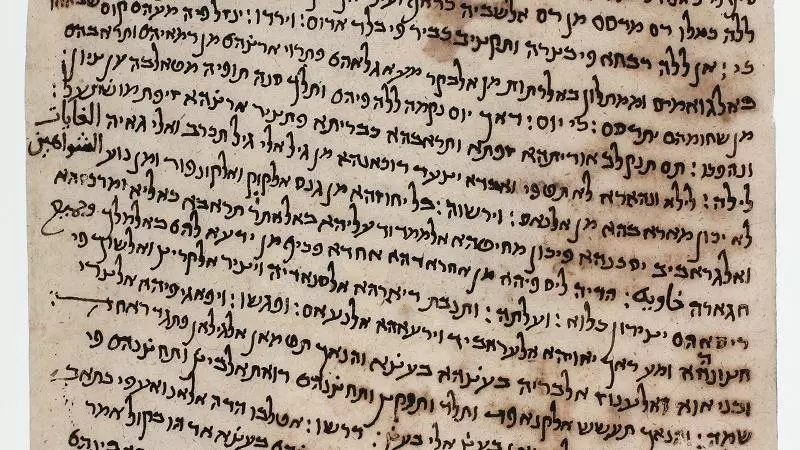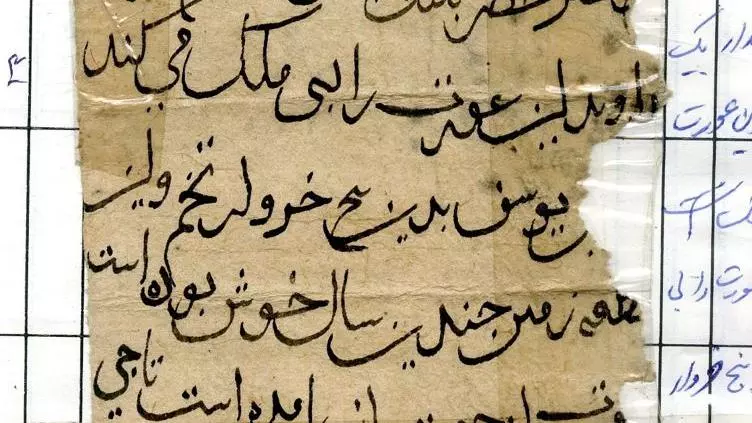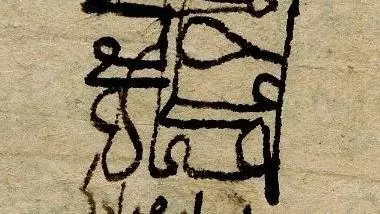

Document of the Month 10/26: Mostly Harmless: An Early Arabic-Persian Lexicon Fragment
19 October 2026
by Kevin Blankinship
Summary:
In his Dictionary of the English Language, the great British essayist Samuel Johnson (d. 1784 CE), perhaps in a rare fit of self-deprecation, defined a lexicographer as “a harmless drudge.” And in fact, confessing to a room full of strangers that one writes dictionaries—or traces their histories—hardly seems like a shortcut to cocktail-party popularity. But since ancient times, those who are dismissed as mere plodders have quietly steered the course of history using nothing but words. Bilingual glossaries like the one at hand play a special role. They rank among the oldest forms of writing, stretching as far back as polyglot Sumerian wordlists, and they foster cultural exchange by encouraging language contact and helping translators do their work. War, trade, diplomacy, proselytising—in short, the main channels of globalisation, can only happen because of lexicographers.
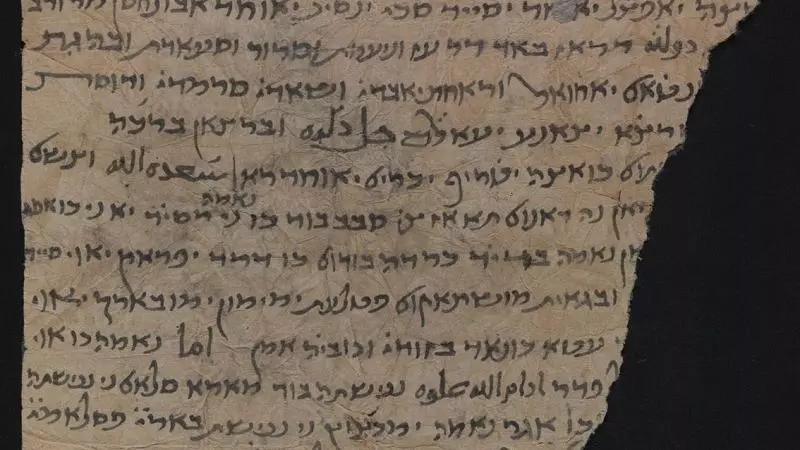
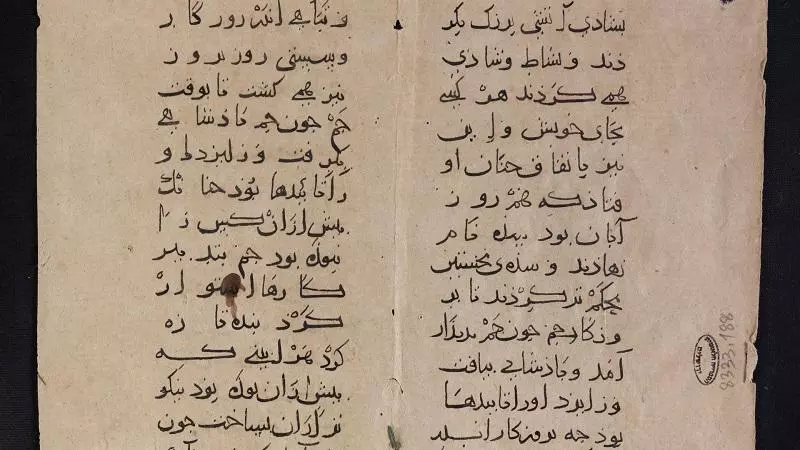
The lexicon in question, Ms.Heb.8333.189, is a curious case. It belongs to a minority of the Bamiyan Papers (or the so-called Afghan Genizah), which usually involve letters, deeds, executive and legal papers, account books, and “miscellaneous lists.” The latter may be the best descriptor for this fragment. Also, unlike most of the Bamiyan Papers, it puts a strong focus on Arabic. Unmistakably a glossary or wordlist, it falls within the early period of Arabic-Persian lexicography, that is, the 5th/11th to the 7th/13th centuries, just before the Mongol conquests. This is exactly the range covered by the Bamiyan Papers; consequently, this phrasebook is an early one. Coinciding with this era was the Sunnī Revival, a term coined by George Makdisi for state-sanctioned Sunnism under the ʿAbbāsids at Baghdad and the Turkic Seljuqs in Nishapur, Rayy, and Isfahan. As a result, Sunnī Islam became the leading branch in the eastern Islamicate world.
Amid this cosmopolitan setting, where Turkic intellectuals and administrators adopted Arabic for science and Persian for statecraft and high culture respectively, one could rise through the ranks through knowledge of languages. Hence the need for Arabic-Persian dictionaries, which emerged in Iran and Central Asia to serve areas with few native Arabic speakers but where bilingual chanceries operated “with a premium on fluency in both Persian and Arabic.” There were comprehensive alphabetical or rhyming dictionaries, topical vocabularies, lexicons of nouns (asāmī) and verbal nouns (maṣādir), and mnemonic poetry (niṣāb) for schoolchildren. These works covered terms of law, theology, medicine, zoology, government, the military, epistolography, and poetry. Such topics hint at precisely who used bilingual dictionaries, that is, the elite intellectual class: theologians, judges and jurists, physicians, apothecaries, state scribes, and poets.
With reference to Ms.Heb.8333.189, it lacks basic clues as to its character and thus requires some informed speculation. The author, date, origin, and parent copy are all a mystery to us, as is the reason why it was written. Fading, fraying, staining, and scratching obscure the verso especially. But messy or not, it appears intended as a proper composition, judging by the basmalah at the beginning. Body parts and defects take up the entire recto side and the middle of the verso, while the margins of the verso contain other topics like fruit, vinegar, gizzards, washbasins, beards, and doors written upside-down. This linguistic potpourri suggests the author had a general interest in vocabulary, above all in afʿal-pattern words that describe physical traits. Further, he seems to have been a Persian speaker who needed a manual for Arabic, being the standard language of technical subjects; the terms always appear in Arabic first, followed by a gloss in Persian. Medieval Arabic sources include whole sections on afʿal words, such as a digression by the great ʿAbbāsid thinker and essayist Abū Ḥayyān al-Tawḥīdī (d. 414/1023). Al-Tawḥīdī lists more than fifty afʿal forms plus some other patterns, mostly about the face, ears, eyes, mouths, teeth, lips, nose, and neck. He further says he is quoting a certain literatus (baʿḍ al-udabāʾ) and that knowledge of such words is useful to chancery scribes (kātib). This could also be why the author of Ms.Heb.8333.189 wrote the fragment.
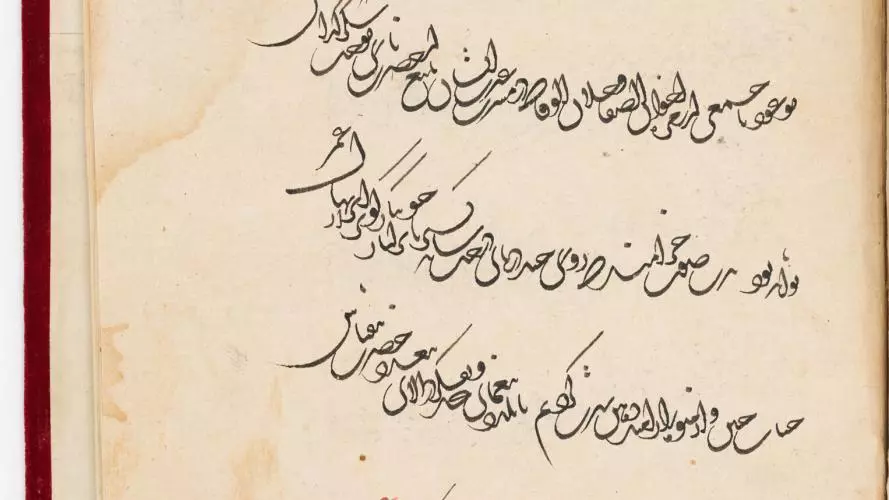
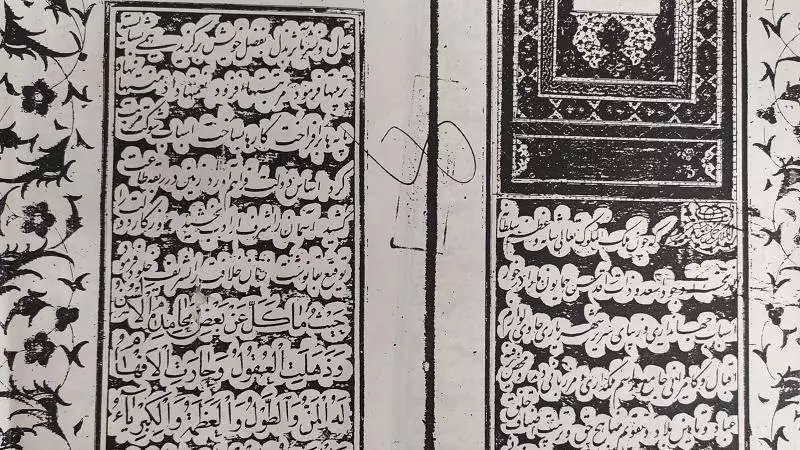
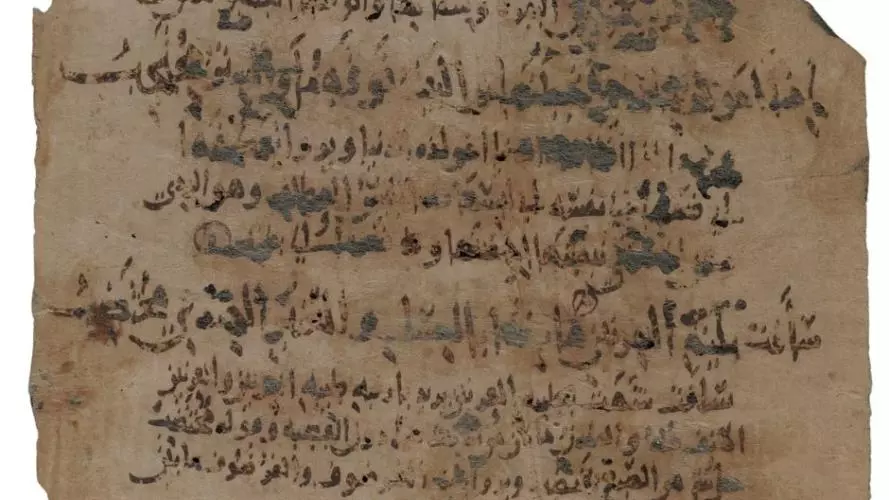
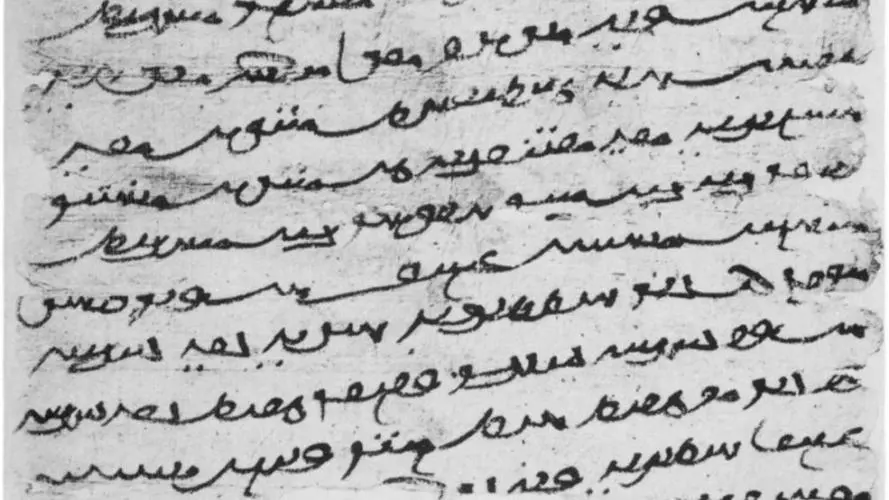
With respect to the words themselves, as noted, a simple Persian gloss accompanies every technical term in Arabic. For instance, recto line 9, the Persian mardī dirāz gardan clarifies the Arabic rajul ajyad, both meaning “long-necked man.” In fact, all the words on the recto are about the head—eyes, ears, lips, necks, and beards. A full quarter of them relate to eye color, which in medical texts is connected to general health. One reads line 2, adʿaj (dark brown); also line 2, aḥwar (stark white-and-black), best known from the Qurʾān’s promise of big-eyed beauties in paradise; line 6, amrah (having eyes which are diseased or weak-sighted from a lack of collyrium, kuḥl); line 7, abyaḍ al-ʿayn (white) and line 8, azraq (blue or green or grey), being two of the ten colours of cataract, which also include lawn al-samāʾ (sky-coloured) for which there is likewise the Persian āsmānī; and line 8, ashhal (hazel), which as in English implies a range from brown to red to blue to grey, hence why medieval explanations of it diverge so sharply. But then again, even elementary colour terms express a range of hues in classical Arabic, e.g., akhḍar (green but also blue or dark-coloured), aṣfar (yellow going from pale to orange to gold to brown), and so on.
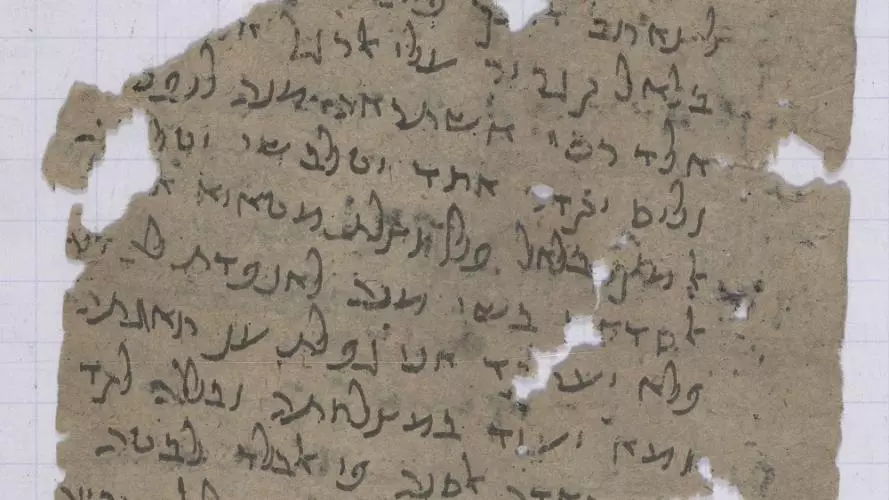
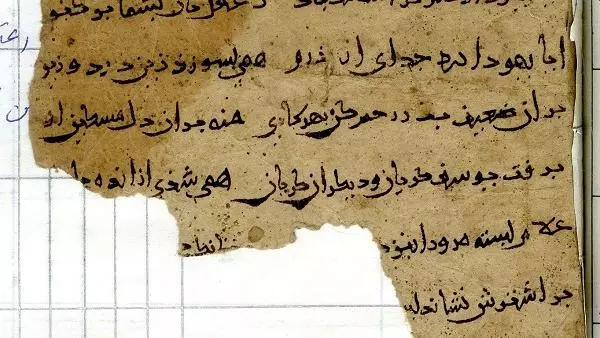
As for the verso, the phrases are less legible but much broader in scope. Appearing twice each are the words amsaḥ (flatfooted/-chested/-buttocked, or perhaps imsaḥ, “wipe,” as explained ahead) (lines 6 and 8) and liḥyataka (your beard, line 7), appearing in a triple sequence: rajjil liḥyatak wa-mashshiṭ liḥyatak sarriḥ liḥyatak. These are three Arabic synonyms for “comb your beard,” continuing the context of washbasins (Arabic al-mīḍaʾah, Persian āb-dastān) and wiping (imsaḥ) from the previous line (6). Note the muhmal signs (dot under the rāʾ, squiggle under the ḥāʾ of liḥyah and under the sīn of sarriḥ) used in manuscript writing to distinguish certain unpointed letters (al-ḥurūf al-muhmalah) from their pointed counterparts (al-ḥurūf al-muʿjamah). Such clarifying marks are found throughout the fragment.
The verso’s margins offer a few intriguing puzzles. The three fruits mentioned, pomegranate (Arabic rummān, Persian nār) (lines 2 and 3), quince (Arabic safarjal, Persian ābī, a synonym of bihī), and pear (Arabic kummathrā, Persian amrūd) (both line 1), are all common ingredients in cuisine but also potions, compounds, and various remedies. This easily connects them with some of the fragment’s other contents, such as the right margin of the verso, line 21, vinegar (Arabic al-khall, Persian sik) and vinegar sop (Arabic al-murrī, Persian āb-kāma), the latter being used to help digestion and stoke the appetite. To see such provisions next to anatomical terms is not unusual. Some Arabic-Persian dictionaries like al-Mirqāh (The Staircase) attributed to the poet and grammarian Adīb Naṭanzī (fl. 5th/11th cen.) have chapters on food right next to those about body parts and defects. Less clear is how the “blackened door” (Arabic bāb musawwadan, Persian darī siyāh karda) found in lines 3–4 and 14–15 relate to the other vocabulary.
There are yet more difficulties. On the one hand, several of the Arabic terms lack precision considering all the options. For example, instead of the phrase kathīth al-liḥyah (full-bearded) found in the fragment, one could simply say akathth (meaning the same thing); instead of aqṭaʿ al-udhun (crop-eared, slit-eared), one could say akhrab (meaning the same thing); instead of aqṭaʿ al-shafah (split-lipped), one could say aflaḥ for the bottom lip, aʿlam for the top, or ashram for both. This suggests the author lacked familiarity with Arabic technical language. “The twins”—fittingly mentioned twice—in verso lines 18 and 19 also seem quite elementary as a technical term. On the other hand, one finds e.g., recto line 14, the rare word athaṭṭ (scraggly-bearded), which suggests the opposite, that is, a mastery of Arabic. The Persian kūsah offered as the equivalent is surely the source of the more common Arabic kawsaj/kūsaj, which means the same thing. One can just make out snatches of words between faded areas, e.g., the gurgling in verso line 23 (Arabic yuqarqir, Persian gharghar [kubīd? khunīd? kunīd?]) or the gizzard in verso line 25 (Arabic al-qāniṣ, Persian sangdān), but without more context it is impossible to tell how they fit together.
For all that such insights from Ms.Heb.8333.189 reveal, they are even more tantalising for what they leave unsaid. Why did the author write these phrases in particular? Which text did they copy, and why? Further, the range and detail of the lexicon recalls the insatiable curiosity that has made dictionary writing a universal pursuit. Having begun as scribal aids in eastern Islamicate lands, bilingual glossaries ended up as “records and to some extent arbiters of the flood of Arabic loanwords and calques into Persian.” Arabic-Persian lexicography lasted well into the 19th century, as seen for instance in John Richardson’s two-volume dictionary (1778–1780) written for British East India Company civil servants. It was abridged as a popular handbook by Charles Wilkins (1810) and later became the groundwork for celebrated philologues like Francis Johnson (d. 1876) and Francis Joseph Steingass (d. 1903). In turn, Steingass’s Comprehensive Persian-English Dictionary remains a standard reference work today (including for this blog post). All this and more thanks to Dr Johnson’s harmless drudges.
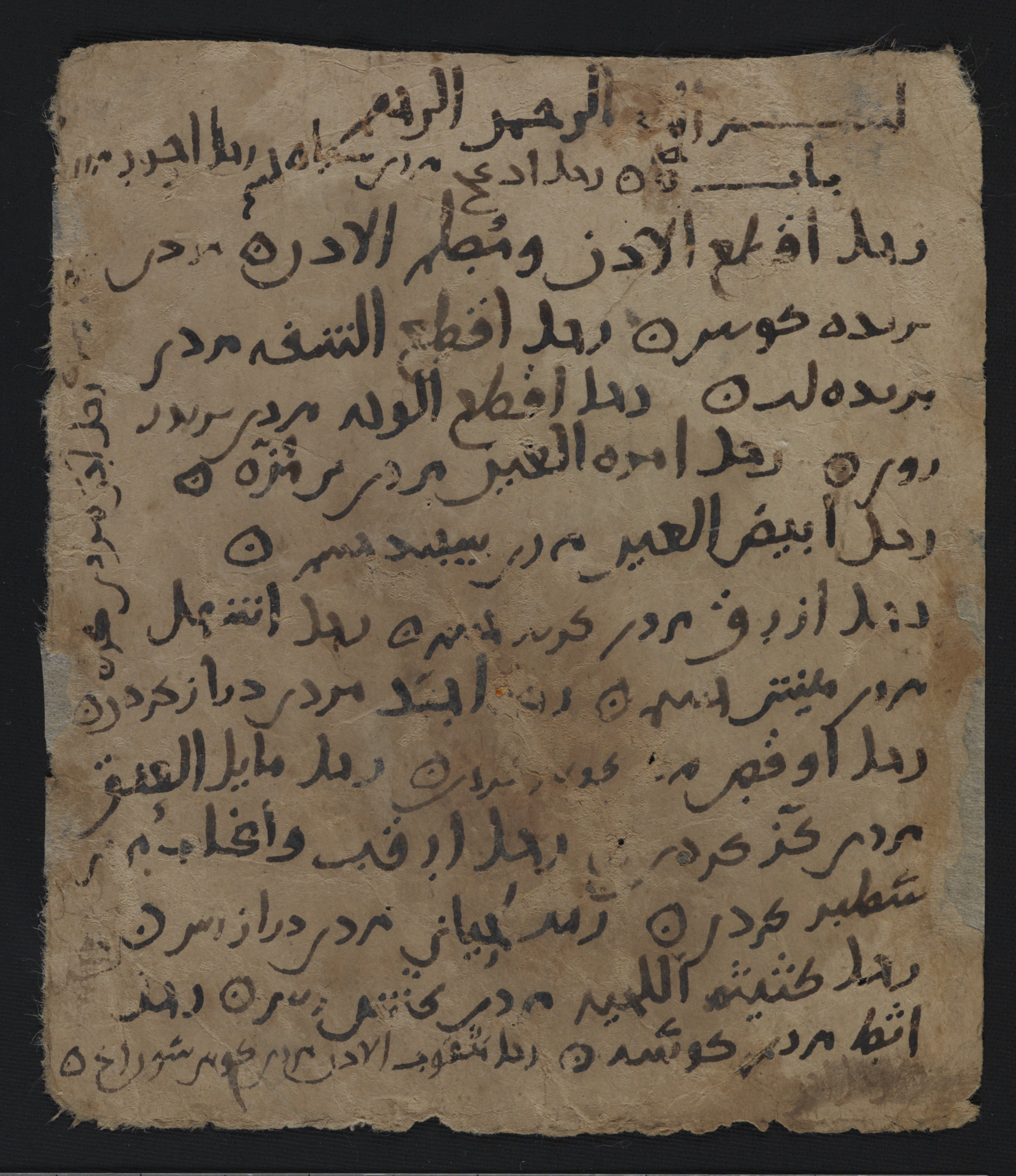
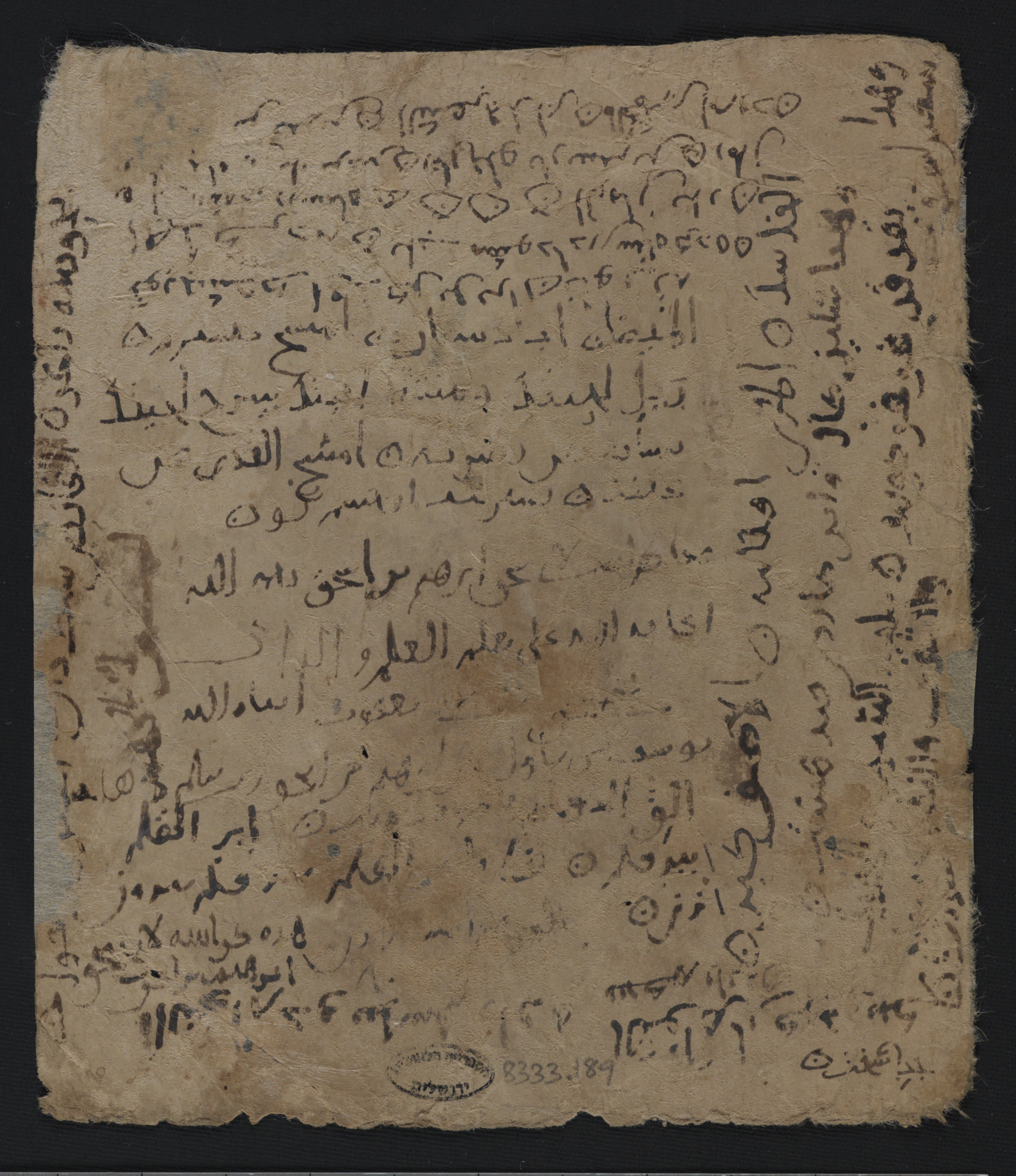
Image 3. NLI, Ms.Heb.8333.189 recto. Reproduced with the permission of the National Library of Israel. "Ktiv" Project. Full details of the document can be found in the Invisible East Digital Corpus.
Image 4. NLI, Ms.Heb.8333.189 verso. Reproduced with the permission of the National Library of Israel. "Ktiv" Project. Full details of the document can be found in the Invisible East Digital Corpus.
Transcription
National Library of Israel, Ms.Heb.8333.189. A. Azad, P. Firoozbakhsh, N. Saqee and M. Arghandehpour, unpublished transcription and translation available online through the Invisible East programme.
recto
بسم الله الرحمن الرحیم
باب [+1] ⦿ رجل ادعج مردی سیاهچشم رجل احور مردی [+/- 1]
رجل اقطع الاذن و مُصله الاذن ⦿ مردی
بریدهگوش ⦿ رجل اقطع الشفه مردی
بریدهلب ⦿ رجل اقطع الوجه مردی بریده
روی ⦿ رجل اهدب العین مردی پرمُژه ⦿
رجل ابیض العین مردی سپیدچشم ⦿
رجل ازڔق مردی گربه چشم ⦿ رجل اشهل
مردی میشی جشم ⦿ رجل اجید مردی درازگردن ⦿
رجل اوقصڔ مر[دی] کو[تـه]گردن ⦿ رجل مایل العنق
مردی کژگردن ⦿ رجل اڔقب و اغلب مردی
سطبرگردن ⦿ رجل لحیاني مردی درازریش ⦿
رجل کثیف اللحیه مردی گشنریش ⦿ رجل
اثط مردی کوسه ⦿ رجل مَشقوب الاذن مردی گوشسوراخ ⦿
(حاشیه چپ) رجل اَذَن مردی کر⦿
verso
(وارونه) [+/- 3] ⦿ السفرجل ابه ⦿ الکمَثری امرود ⦿
[رمان حامض] نار ترش ⦿ رمان حلو نار شیرین ⦿ رمان
[باب سودا؟] در سیاه ⦿⦿⦿⦿ الرمان نار ⦿
[+/- 1] کرده (؟) ⦿ باب مسودا دری سیاه کرده ⦿
[+/- 5] ⦿ [+/- 3]
(ور درست) الطیلسان (؟) دستار (؟) ⦿ امسح (؟) [+/- 1] ⦿
[+ 2] ⦿ [+ 4]
[+ 3] ⦿ امسح القدم (؟) [+ 1]
[+ 1] ⦿ [+ 3] ⦿
هذا کراس لاسحق ابرهیم بن اسحق دامه الله (؟)
[+/-2] علی تعلیم (؟) العلم و الـ[+1]
[+/-2] یعقوب ابقاه الله
یوسف بن شاول (؟) بن (؟) ابرهیم بن اسحق [+/-2]
[+/- 5] ⦿ ابر (؟) القلم
تیز (؟) قلم ⦿ [+/- 2] القلم تیز(؟) قلم بیرون (؟)
[+ 1] ⦿ هذه کراسه لابی اسحق
بن ابرهیم بن اسحق
(وارونه) [+/- 7]
[+ 2]
(ور درست) جیدا نسخت ⦿
(حاشیه راست) [+/-1] ⦿ [+/-2]⦿ [+/-2]⦿
[+/-7] ⦿
[+/-3] ⦿ [+/-3]
[+/-2] [+/-3] ⦿
(حاشیه چپ) [+/- 8]
Translation
recto
- In the name of God, the Merciful, the Compassionate
- Chapter [+1] ⦿ Man with dark [brown] eyes Man with dark [brown] eyes Man with very dark brown eyes Man [+/-1]
- Man with a severed ear and mutilated ear ⦿ Man
- with a severed ear ⦿ Man with a severed lip Man
- with a severed lip ⦿ Man with a deformed face Man with a deformed
- face ⦿ Man with thick eyelashes Man with thick eyelashes ⦿
- Man with prominent whiteness of the eye Man with [prominent] whiteness of the eye ⦿
- Man with blue eyes Man with blue [lit. ‘cat’] eyes ⦿ Man with grey-blue eyes
- Man with grey-blue [lit. ‘sheep’] eyes ⦿ Long-necked man Long-necked man ⦿
- Short-necked man Short-necked (?) man ⦿ Crooked-necked man
- Crooked-necked man ⦿ Wide-necked man
- Wide-necked man ⦿ Man with a long beard Man with a long beard ⦿
- Man with a full beard Man with a full beard ⦿ Bare-chinned
- man Beardless man [lit. ‘shark’-like] ⦿ Man with a pierced ear Man with a pierced ear ⦿
- (Left margin) Man with large ears Deaf man
verso
- (Upside down) Quince Quince ⦿ Pear Pear ⦿
- [Sour pomegranate?] Sour pomegranate ⦿ Sweet pomegranate Sweet pomegranate ⦿ Pomegranate
- [Black door?] Black door ⦿⦿⦿⦿ Pomegranate Pomegranate ⦿
- [+/-2] ⦿ Blackened door Blackened door ⦿
- [+/- 5] ⦿ [+/- 3]
- (Right side up) Turban (?) Turban ⦿ Flat-[+/-1] ⦿
- [+/-2] ⦿ [+4]
- [+3] ⦿ Flat-footed (?) [+1]
- [+1] ⦿ [+3] ⦿
- This booklet belongs to Isḥaq [b.] Ibrahīm b. Isḥaq, may God extend his
- [+2] for the teaching of Islamic knowledge and the [+1]
- [+/- 2] Yaʿqūb may God preserve him.
- Yūsuf b. Shāūl (?) b. (?) Ibrahīm [+/- 2]
- [+/- 5] ⦿ Sharpening of the pen (?)
- Sharp (?) pen ⦿ [+/- 2] The pen [+1] pen
- [+1] ⦿ This booklet belongs to Abī Isḥaq
- b. Ibrahīm b. Isḥaq
- (Upside down) [+/- 7]
- [+2]
- (Right side up) I transcribed [it] well.
- (Right margin) [+/-1] ⦿ [+/-2]⦿ [+/-2]⦿
- [+/-7] ⦿
- [+/-3] ⦿ [+/-3]
- [+/-2] [+/-3] ⦿
- (Left margin) [+/- 8]
Notes
- Niek Veldhuis, “Ancient Mesopotamia,” 14–15.
- Haim, “What is the ‘Afghan Genizah’?” 71.
- Perry, “Early Arabic-Persian Lexicography,” 248.
- Makdisi, “The Sunnī revival.”
- Baevskii, Early Persian Lexicography, 118.
- Baevskii, Early Persian Lexicography, 120.
- Al-Tawḥīdī, Baṣāʾir, vi, 145–147.
- Richardson, “Blue and Green Eyes,” 19.
- Al-Aṣmaʿī, “Kitāb Khalq al-insān,” 183.
- Q al-Dukhān 44:54, al-Ṭūr 52:20, al-Raḥmān 55:72, and al-Wāqiʿah 56:22.
- Ḥunayn b. Isḥāq, The Book of the Ten Treatises, Arabic 141, English 69.
- Richardson, “Blue and Green Eyes,” 16.
- Gacek, Arabic Manuscripts, 286.
- Ibn al-Tilmīdh, Dispensatory, e.g., 28, 202 (#76), 306 (#423 and #424).
- Steingass, Persian-English Dictionary, 1009, “kāma,” also mentioned at 940, “fawāda,” and 941, “fūda.”
- Adīb Naṭanzī, attr., al-Mirqāh, ch. 2 and 3, 62–73; cf. the morphological arrangement of e.g., al-Zamakhsharī, Muqaddimat al-adab.
- By itself, the adjective aqṭaʿ (fem. qaṭʿāʾ, pl. quṭʿān) means “one-handed amputee,” e.g., al-Fayyūmī, al-Miṣbāḥ al-munīr, 509.
- Al-Thaʿālibī, Fiqh al-lughah, i, 401.
- Steingass, Persian-English Dictionary, 1062.
- Perry, “Early Arabic-Persian Lexicography,” 249.
Primary
Adīb Naṭanzī, Badīʿ al-Zamān, attr. Al-Mirqāh, ed. Jaʿfar Sajjādī. Tehran: Bunyād-i Farhang-i Īrān, 1967.
Al-Aṣmaʿī. “Kitāb Khalq al-insān,” in August Haffner (ed.), Texte zur arabischen Lexikographie. Leipzig: Otto Harrassowitz, 1905, 158–232.
Al-Fayyūmī, Aḥmad b. Muḥammad. Al-Miṣbāḥ al-munīr fī gharīb al-Sharḥ al-kabīr li-l-Rāfiʿī, ed. ʿAbd al-ʿAẓīm al-Shinnāwī. Cairo: Dār al-Maʿārif, repr. 1977.
Ḥunayn b. Isḥāq. The Book of the Ten Treatises on the Eye Ascribed to Hunain ibn Ishâq (809–877 A.D.), ed. and trans. Max Meyerhof. Cairo: Government Press, 1928.
Ibn al-Tilmīdh, Hibat Allāh b. Ṣāʿid. The Dispensatory of Ibn al-Tilmīd, ed. and trans. Oliver Kahl. Leiden: Brill, 2007.
Al-Tawḥīdī, Abū Ḥayyān. Al-Baṣāʾir wa-l-dhakhāʾir, ed. Wadād al-Qāḍī, 10 vols. Beirut: Dār Ṣādir, 1984.
Al-Thaʿālibī, Abū Manṣūr. Fiqh al-lughah wa-sirr al-ʿarabiyyah, ed. Khālid Fahmī, 2 vols. Cairo: Maktabat al-Khānjī, 1998.
Al-Zamakhsharī, Abū l-Qāsim. Muqaddimat al-adab, yā Pīshraw-yi adab, ed. Muḥammad Kāẓim Imām, 2 vols. Tehran: Dānishgāh-i Tihrān, 1343 = 1964).
Secondary
Baevskii, Solomon I. Early Persian Lexicography: Farhangs of the Eleventh to the Fifteenth Centuries, trans. N. Killian, rev. John R. Perry. Kent: Global Oriental, 2007.
Gacek, Adam. Arabic Manuscripts: A Vademecum for Readers. Leiden: Brill, 2009.
Haim, Ofir. “What is the ‘Afghan Genizah’? A short guide to the collection of the Afghan Manuscripts in the National Library of Israel, with the edition of two documents.” Afghanistan 2, no. 1 (Apr. 2019), 70–90.
Makdisi, George. “The Sunnī revival,” in D.S. Richards (ed.), Islamic Civilisation 950–1150: Papers on Islamic History. Oxford: Bruno Cassirer; London: Faber and Faber, 1973, 155–168.
Perry, John R. “Early Arabic-Persian Lexicography: The Asāmī and Maṣādir Genres,” in K. Dévényi, T. Iványi, and A. Shivtiel (eds.), The Arabist, Budapest Studies in Arabic 6–7: Proceedings of the Colloquium on Arabic Lexicology and Lexicography (C.A.L.L.), Part 1. Budapest: Eötvös Loránd University Chair for Arabic Studies and the Csoma de Körös Society Section of Islamic Studies, 1993, 247–260.
Richardson, Kristina. “Blue and Green Eyes in the Islamicate Middle Ages.” Annales islamologiques 48, no. 1 (2014), 13–29.
Steingass, Francis Joseph. A Comprehensive Persian-English Dictionary. London: Routledge and Kegan Paul, 1892.
Veldhuis, Niek. “Ancient Mesopotamia,” in John Considine (ed.), The Cambridge World History of Lexicography. Cambridge: Cambridge University Press, 2019, 11–35.
Cite this article
Blankinship, K. 2026. "Mostly Harmless: An Early Arabic-Persian Lexicon Fragment" Document of the Month. Invisible East. doi:
About the author
Kevin Blankinship is Associate Professor of Arabic and Islamic Studies at Brigham Young University (Provo, Utah). His upcoming book, Steal No More from Nature, explores the work of al-Maʿarrī (d. 449/1057), a staunch vegan poet and witty man of letters, in the context of Islamic animal ethics. He is also collaborating with Li Guo (University of Notre Dame) on an edition and translation of the surviving poems of “the Arab Aristophanes,” Ibn Dāniyāl (d. 710/1310). His work has been supported by the University of Oxford, Columbia University, and the Danish Independent Research Fund, among others. He is a published poet and essayist, and his writing has appeared in The Atlantic, The Times Literary Supplement, and other leading outlets. He holds a PhD from the University of Chicago.
Acknowledgements:
Many thanks go to Geert Jan van Gelder, emeritus AlBabtain Laudian Professor of Arabic at the University of Oxford; Alan Elbaum, senior researcher for the Princeton Geniza Lab; Daniel Sheffield, Associate Professor of Near Eastern Studies at Princeton University; and Theodore Beers, Persian/Arabic philologist and research software engineer at Boot.dev. These generous colleagues rescued me from many errors and solved problems with Ms.Heb.8333.189 that otherwise would have eluded me.
The online series, Document of the Month, presents some of the most interesting and revealing medieval documents from the desks of Invisible East researchers and their colleagues worldwide. Each piece in the series is dedicated to a single document or a closely related group of documents from the Islamicate East and tells their story in an engaging and accessible way. You will also find images, editions and translations of the documents. If you would like to contribute to the Document of the Month series, please, get in touch with the team.